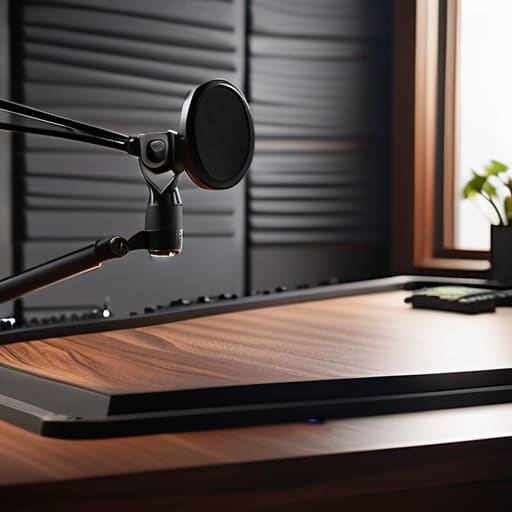
I spent three hours last Tuesday staring at a waveform, wondering why I hadn’t just paid an assistant to deal with the rhythmic clicking of a guest’s nervous pen. Most “gurus” will tell you that learning how to edit your own work is about mastering the latest AI-driven noise reduction plugin or buying a $500 library of transition sound effects. They’re lying. Real editing isn’t about the bells and whistles; it’s about the exhausting, granular process of deciding whether a three-second pause adds tension or just makes the listener think their headphones have died.
I’m not here to sell you a masterclass or a subscription to a plugin suite you don’t need. Instead, I want to talk about the actual mechanics of the craft: how to spot your own verbal tics, how to manage your ears when they start to fatigue, and how to navigate the mental slog of the third pass. I’m going to show you how to trim the fat without killing the soul of the conversation, focusing on the specific, unglamorous decisions that actually separate a professional production from a hobbyist’s mess.
Structural Revision Techniques for When the Logic Fails

When you sit down with a rough cut and realize the middle thirty minutes feels like a slog, you aren’t looking at a technical error; you’re looking at a structural failure. This is where structural revision techniques actually matter. I’ve spent many nights staring at a waveform, realizing that even though the audio is crisp, the narrative arc is a flat line. You can’t just fix this with a compressor or a noise gate. You have to be willing to pick up the scalpel and move entire segments. If a guest’s anecdote is brilliant but doesn’t actually serve the central thesis of the episode, it has to go—even if it goes on my “perfect but irrelevant” list.
The best way to spot these logical gaps is by reading aloud for flow, or in my case, listening to the export on repeat until my ears bleed. If you find yourself losing the thread of the argument or getting lost in a tangent, your listener definitely will too. Don’t confuse this stage with the final polish; this isn’t about eliminating filler words or fixing a pop in the mic. This is about the heavy lifting: deciding if the story you thought you were telling is actually the story that made it onto the tape.
Improving Writing Clarity by Killing Your Darlings

I have a notebook filled with “perfect” sentences—lines from guests that were poetic, witty, or profound, but had absolutely nothing to do with the topic at hand. I keep them because it hurts to delete them, but in the edit, they are poison. When you are working on improving writing clarity, you have to learn to treat your favorite sentences like a guest who has overstayed their welcome: be polite, but show them the door. If a paragraph is beautiful but doesn’t move the listener from point A to point B, it’s just noise.
This is where the real work happens. Most beginners confuse proofreading vs editing; they think they’re done once the typos are gone, but they haven’t actually addressed the bloat. You need to go in with a scalpel and start eliminating filler words and those long-winded tangents that you spent an hour crafting. My rule of thumb is simple: if the sentence doesn’t serve the core narrative, it’s gone. It feels aggressive at first, but your listeners will thank you for the brevity.
Five Ways to Stop Sabotaging Your Own Edit
- Change your monitoring environment. If you’ve been staring at the same waveform for three hours, your brain starts to compensate for the mistakes. Switch from your studio monitors to a pair of cheap earbuds, or better yet, listen on your phone in the car. If the pacing feels off when you aren’t leaning over the desk, it’s because it’s actually off.
- Edit for the gaps, not just the words. Beginners focus on cutting out the “ums” and “ahs,” which is fine, but they miss the heavy silences that kill momentum. I look for the dead air between a question and an answer that lasts longer than 1.5 seconds. If the silence doesn’t feel intentional or dramatic, it’s just a hole in your story. Trim it.
- Use the “zero-volume” test. Turn your speakers all the way down until you can barely hear anything. This forces you to notice the balance. If you can’t distinguish the guest’s voice from the host’s voice at near-zero volume, your compression settings are wrong or your gain staging was a mess from the start. Fix the levels before you touch a single EQ knob.
- Stop EQing your way out of a bad room. I see people trying to use high-pass filters and surgical notches to remove the sound of a refrigerator or a thin-walled bedroom. You can’t polish a brick. If the room is too “live” and the reverb is baked into the vocal, stop tweaking the frequencies and just accept that you need to re-record or find a different way to frame the segment.
- The “First Listen” rule. Never, under any circumstances, export your final master and upload it immediately after your last edit. Walk away. Go fix a piece of gear or grab a coffee. Come back twelve hours later and listen to the whole thing from start to finish without touching the mouse. You will catch at least three mistakes you were physically incapable of hearing while you were in the “editing trance.”
The Bottom Line
Stop trying to save every “perfect” moment; if a sentence doesn’t move the listener from point A to point B, it’s just noise, no matter how much you like the way it sounds.
Your ears will lie to you after hour four of a session, so build in mandatory breaks or use a fresh set of headphones to catch the mistakes you’ve become deaf to.
Structure isn’t a suggestion—if the narrative arc is broken, no amount of EQ or compression is going to stop a listener from tuning out halfway through.
The Reality of the Red Line
Editing your own work isn’t about finding the ‘perfect’ version; it’s about the brutal, repetitive process of realizing that the thirty minutes you spent setting up the perfect narrative arc actually sounds like a rambling mess once you’re sitting there at 2:00 AM with your headphones on. You have to be willing to cut the parts you’re most proud of if they don’t actually serve the listener.
Nadine Okafor
The Long Game of the Final Cut

At the end of the day, editing your own work isn’t about finding some magical setting in your DAW that makes everything sound professional. It’s about the discipline to look at your structure and realize it’s lopsided, and the guts to kill the darlings that you spent three hours perfecting but which ultimately serve no purpose for the listener. You have to be willing to move segments, trim the fat, and accept that sometimes the best version of an episode is the one where you cut out the very thing you were most proud of. It is tedious, it is often frustrating, and it is the only way to ensure your work doesn’t sound like a cluttered mess.
If you feel like you’re spinning your wheels or that your edits aren’t making a dent, just remember that even the most seasoned producers have days where they stare at a waveform and feel completely lost. The difference between someone who makes a podcast and someone who makes a good podcast is simply the willingness to sit in that discomfort and do the unglamorous work. Don’t let the fear of a “bad” edit stop you from finishing. You can’t fix a blank timeline, but you can always refine a rough one. Just keep cutting, keep listening, and trust the process of the craft.