

I once spent six hours editing a documentary series for a local radio station, only to realize I was staring at a waveform that looked like a solid, unbroken brick of sound. My guest hadn’t been an interviewee; they had been a human landslide, burying every single one of my prepared questions under a mountain of uninterrupted anecdotes. It’s a nightmare every producer dreads, yet most “experts” will tell you that you just need a better microphone or a more expensive coaching seminar to fix it. They’re wrong. Learning how to keep an interview from becoming a monologue isn’t about your gear or your “presence”—it’s about the discipline of listening and knowing when to physically interrupt the flow before you lose the story entirely.
I’m not here to sell you a masterclass or a list of “magic” question templates that sound like they were written by a corporate HR department. I’m going to tell you what actually works when you’re sitting in a quiet room with a guest who won’t stop breathing down your mic. We’re going to talk about the uncomfortable mechanics of redirection, the timing of the pivot, and how to reclaim the narrative without being a jerk.
Mastering Active Listening Techniques in Interviews to Break the Cycle

The biggest mistake I see is people treating their interview script like a holy text. You sit there with your list of questions, waiting for a gap in the air so you can jump in with question number four, but you aren’t actually hearing a word they’re saying. If you want effective interview conversational flow, you have to be willing to ditch the script. When a guest hits on something unexpected or profound, that is your cue to pivot. If you ignore a goldmine of a comment just to stay “on track,” you’ve already lost the listener.
This is where active listening techniques in interviews actually matter. It isn’t just about nodding; it’s about using verbal cues and pacing to signal you are present. A simple “mm-hmm” or a brief “right” at the correct moment keeps the energy moving without hijacking the mic. You need to listen for the breath, the pause, and the shift in tone. If you notice them starting to drift into a rambling tangent, don’t just let them drown in their own words—interject with a gentle, clarifying question to pull them back into a dialogue.
Using Interview Verbal Cues and Pacing to Reclaim the Room
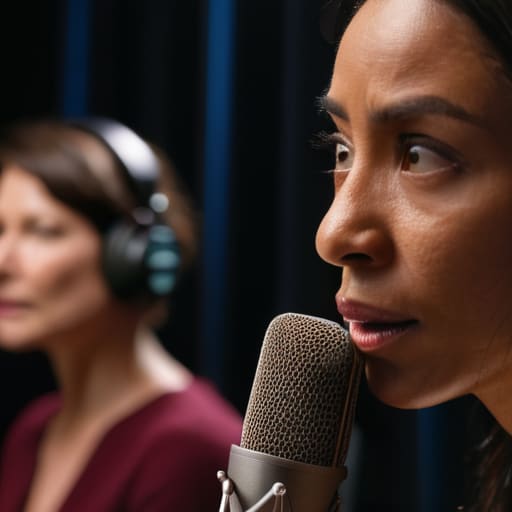
If you find yourself sitting there while a guest drones on for six minutes straight, you’ve lost control of the room. You can’t just wait for them to run out of breath; you have to use interview verbal cues and pacing to steer the ship. I’ve learned that a well-timed “Mm-hmm” or a slight lean forward can signal that you’re still present, but if they don’t take the hint, you need to interrupt. It feels rude at first—trust me, I used to sweat through my shirts trying to be “polite”—but a soft, “If I could just pause you there for a second,” is often the only way to break a runaway train.
The goal is to maintain an effective interview conversational flow rather than acting like a human metronome. If you notice their cadence slowing down into a rhythmic, hypnotic lecture, that is your cue to jump in with a clarifying question. Don’t wait for the natural pause, because with some guests, that pause is never coming. You aren’t there to be a silent witness; you’re there to facilitate a dialogue.
Five ways to stop being a spectator in your own recording
- Stop the “Question-Answer-Question” trap. If you’re just reading a list of prepared prompts, you aren’t interviewing; you’re conducting a deposition. When a guest gives you a nugget of something interesting, drop your script. Follow the thread. If you’re too scared to deviate from your notes, you’ve already lost the conversation.
- Watch your “Mm-hmm” levels. In the edit, those little verbal nods you use to show you’re listening turn into a rhythmic nightmare that makes the listener want to turn the volume up just to hear the guest. Learn to use silence or a simple nod instead. If you must use a verbal cue, keep it under 0.5 seconds and keep it low-frequency.
- The three-second rule. When a guest stops talking, count to three in your head before you jump in. Often, they aren’t finished; they’re just processing. If you cut them off the second they pause, you’re robbing yourself of the best, most unscripted reflections that usually come after a moment of silence.
- Use “The Pivot” rather than the “The Interrupt.” If a guest has been spinning their wheels on a single point for five minutes, don’t just cut them off mid-sentence—it’s a mess to fix in post. Wait for the breath, then bridge it: “That’s a massive point about the technical side, but I want to pull that back to how it actually felt on the ground.”
- Check your own ego regarding the “Smart Question.” I spent my first two years trying to ask the most profound, complex questions possible to prove I was a “real” producer. It backfired. Complexity breeds monologues because the guest spends three minutes just trying to untangle your sentence. Ask simple, punchy questions. Let them do the heavy lifting.
The Reality Check

If you find yourself thinking about your next question while the guest is still speaking, you’ve already lost the interview; stop planning and start listening to the nuance in their tone.
Silence isn’t a mistake you need to fix with “um” or “right”—it’s a tool that forces the guest to fill the gap, which is usually when the best, unscripted material comes out.
Watch your clock, but don’t let it dictate the rhythm; if a guest is on a roll with a profound point, let them finish, even if it means cutting your prepared list of questions later.
The Silence You’re Afraid Of
The biggest mistake I see new producers make is treating silence like a mistake that needs fixing. They’re so terrified of a three-second gap that they jump in with a follow-up question before the guest has even finished processing their own thought. If you keep filling those gaps, you aren’t conducting an interview; you’re just managing a monologue. Let the silence sit for a beat—that’s usually when the real answer starts to surface.
Nadine Okafor
The Reality Check
At the end of the day, preventing a monologue isn’t about following a rigid script or checking off a list of academic communication theories. It’s about the mechanics of the room. You have to manage your own impulse to fill the silence, use your verbal cues to steer the ship without being a jerk, and—most importantly—actually listen to the answer instead of just waiting for your turn to speak. If you find yourself drifting into a lecture, you’ve already lost the thread. It takes constant, active recalibration to keep the energy moving between two people, but that is exactly where the good stuff lives. If you aren’t fighting to keep that balance, you aren’t producing an interview; you’re just recording a very long, very expensive voicemail.
Look, you’re going to mess this up. You’ll get excited about a point you wanted to make, you’ll interrupt a guest mid-sentence, or you’ll realize halfway through a recording that you haven’t spoken in ten minutes. I have a notebook full of “perfect” sentences I had to cut because I let the pacing slip, and I’ve sat through hours of my own bad edits. Don’t let that stop you. The craft is unglamorous and it is often frustrating, but the ability to facilitate a genuine, two-way exchange is a skill you can actually build with enough repetition. Stop trying to be a polished broadcaster and just focus on being a competent navigator. The listeners will tell the difference.




