

I spent three hours last Tuesday staring at a waveform that looked like a flat line, wondering why my guest sounded like they were reading a press release rather than talking to a human being. It wasn’t a technical failure; the mic was fine and the room was dead quiet. The problem was that I had gone into the session with a rigid list of questions and zero intention of actually listening to the answers. I was so focused on my “prepared content” that I completely missed the moment they almost said something real. If you’re struggling with how to ask a follow up question that actually lands, it’s usually because you’re treating the interview like a deposition instead of a conversation.
I’m not going to sell you a masterclass or tell you that you need a PhD in psychology to get a good clip. I’ve spent twenty years in the edit suite hearing exactly where interviews go to die, and I want to show you how to avoid those dead ends. We’re going to talk about the practical, slightly uncomfortable mechanics of digging deeper—the kind of stuff that turns a scripted, boring segment into something people actually want to listen to.
Ditching the List for Real Active Listening Techniques

The biggest mistake I see new producers make is treating their interview like a grocery list. They sit there with a notebook, eyes glued to their scribbled prompts, waiting for the guest to stop talking just so they can tick the next box. When you do that, you aren’t interviewing; you’re just conducting a clinical interrogation. If you want to actually improve conversational depth, you have to put the pen down. You need to stop looking for the next question and start listening to the gaps in what they just said.
Real active listening techniques aren’t about being a silent statue; they are about catching the emotional pivot points. When a guest’s voice drops an octave or they pause for a second too long before answering, that is where the story lives. Instead of jumping to your prepared prompt about their career trajectory, use those moments to deploy probing questions for interviews that address the subtext. If they mention a “difficult period” but move past it quickly, don’t let them. Ask them what that difficulty actually felt like in the room. That’s how you get the gold, not the scripted version they’ve told ten other podcasts.
Using Probing Questions for Interviews to Break the Surface
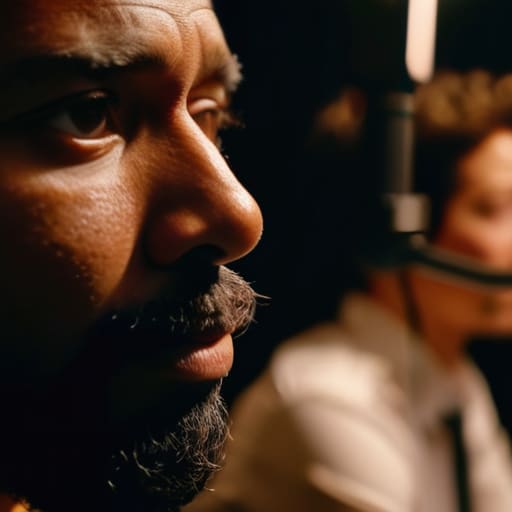
If you want to get past the rehearsed talking points, you have to stop treating your interview like a deposition. Most guests come in with a mental script, and they will stick to it if you only stick to your prepared list. To break that cycle, you need to use probing questions for interviews that target the “why” and the “how” rather than the “what.” When a guest gives you a polished, thirty-second answer that sounds like it was written by a PR firm, don’t move to the next question on your sheet. Instead, lean in. Ask them to describe the specific moment they realized things were going wrong, or what that silence felt like in the room.
This is where you move from mere information gathering to improving conversational depth. You aren’t just looking for facts; you’re looking for the friction. If they mention a conflict, don’t let them gloss over it with a vague “it was a learning experience.” Dig into the mess. Use those small, pointed prompts—”What did you do next?” or “How did that change your perspective?”—to peel back the layers. It feels a bit intrusive at first, but that’s usually exactly when the real story starts to emerge.
Five Ways to Stop Being a Human Questionnaire
- Embrace the uncomfortable silence. When a guest finishes a sentence, don’t immediately jump in with your next prepared question just to fill the air. Count to three in your head. Often, they’ll realize they left a gap and will fill it with the actual gold you were looking for.
- Listen for the “pivot words.” If a guest says, “It was difficult, but we managed,” your follow-up shouldn’t be about the difficulty; it should be about the “but.” That’s where the mechanics of the story live.
- Use the “Echo Technique” when you’re stuck. If they say something profound or confusing, just repeat the last three or four words they said with a rising inflection. It’s a low-effort way to signal you’re listening and forces them to expand without you having to manufacture a complex query on the fly.
- Watch out for the “Yes/No” trap. If you find yourself asking questions that can be answered with a single word, you’ve failed. If your follow-up is “Did that make you angry?”, you’re wasting the slot. Change it to “How did that anger change your approach?”
- Don’t be afraid to interrupt (politely). If a guest is on a roll but starts drifting into a scripted tangent that’s going nowhere, lean in. Use their name—it’s a psychological reset—and say, “Before we move on from that, I want to go back to what you said about [X].” It’s better to steer the ship than to let it drift into a dead end.
The Producer’s Cheat Sheet for Better Follow-Ups
Stop staring at your prepared list of questions; if you aren’t listening to the specific words the guest just used, you aren’t interviewing, you’re just reading a script.
When a guest gives you a surface-level answer, don’t move to the next topic—use a “how” or “why” probe to force them to actually unpack the mess they just touched on.
Silence is your most effective tool; after you ask a follow-up, shut up and let the awkwardness sit for three seconds, because that’s usually when the real, unscripted truth comes out.
The Gap Between the Script and the Truth
The best follow-up isn’t some clever technique you pulled from a textbook; it’s the question that happens when you finally stop waiting for your turn to speak and actually hear the thing they didn’t mean to say. If you’re too busy looking at your notes to catch that half-second of hesitation in their voice, you’re just recording a script, not an interview.
Nadine Okafor
The Long Game of the Follow-Up

If you take anything away from this, let it be that a good follow-up isn’t a magic trick; it’s just the result of doing the work. You have to ditch the rigid, pre-written list that keeps your eyes glued to your notebook and actually start listening to the gaps in what your guest is saying. Whether you are using a probing question to peel back a layer of a story or simply pausing for three seconds to let the silence do the heavy lifting, the goal is the same: getting past the rehearsed answers. It’s about moving from a structured interrogation to a genuine conversation where the best moments happen in the tangents you didn’t plan for.
Look, there will be days when you feel like you’ve completely lost the thread, or when a guest gives you nothing but one-word answers despite your best efforts. That is part of the job. Don’t let a bad session make you think you’re a bad producer. The craft of interviewing is a muscle, and you only build it by showing up to the sessions, making the awkward asks, and failing occasionally. Keep your recorder running, keep your ears open, and eventually, you’ll stop chasing the script and start catching the truth.




