

I remember sitting in a cramped, poorly treated studio in Birmingham, staring at the waveform on my monitor and feeling my stomach sink. I had spent three weeks booking this “expert,” only to watch them deliver a series of staccato, one-word responses that left me staring at a silent room. You can buy the most expensive Shure SM7B on the market, but no amount of high-end gear is going to fix the dead air when you’re trying to figure out how to handle a guest who gives short answers. It’s not a technical failure; it’s a conversational one, and it’s the kind of thing that makes you want to throw your headphones against the wall.
I’m not here to sell you a masterclass on “energy manifestation” or some vague seminar on charisma. I want to talk about the actual mechanics of the interview. I’m going to show you the specific, slightly uncomfortable pivots you need to make to dig for the meat of a story, and how to recognize when a guest is actually being difficult versus when they just need a better prompt. This isn’t about being a perfect orator; it’s about learning the craft of extraction so you don’t end up with an episode that’s nothing but awkward silences.
Mastering Active Listening Techniques to Save a Dying Interview
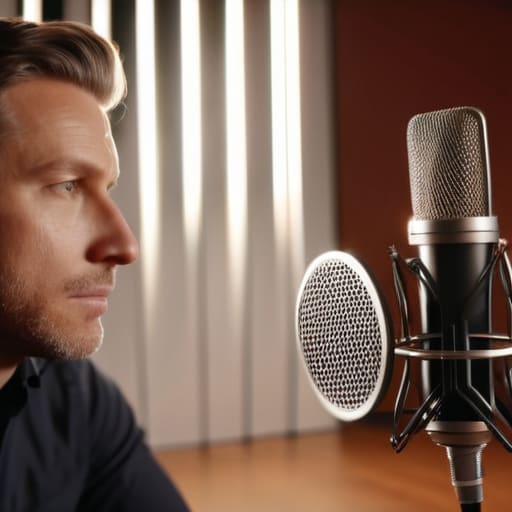
When you’re sitting behind a mic and the momentum hits a wall, your instinct is to scramble for the next question on your list. Don’t. If you just jump to the next bullet point, you aren’t interviewing; you’re conducting a deposition. Instead, lean into active listening techniques that force the guest to expand. If they give you a clipped, three-word response, try a “mirroring” technique. Repeat the last two or three words they said with a slightly rising inflection. It sounds simple, almost patronizing if you do it wrong, but it signals that you are actually processing their thought, which often nudges them to fill the void without you having to ask a formal question.
Sometimes, the silence isn’t a lack of content, but a symptom of social anxiety in guests or just a moment of processing. I used to panic and fill every gap with my own voice, but that just kills the rhythm. Instead, try overcoming awkward silences by simply waiting three seconds longer than feels comfortable. Often, the most profound insights come right after the guest thinks they’ve finished their thought. Give them the space to realize they haven’t actually answered the core of what you asked.
Using Body Language Cues to Reclaim the Room
If you’re recording in person, you have a massive advantage that a Zoom call completely strips away. When a guest is retreating into themselves, you can see the exact moment they shut down. I’ve found that leaning in slightly—just a few inches—can act as a physical nudge to keep them engaged. It signals that you are actually present, which is one of the most underrated effective communication strategies for building rapport. If you sit back with your arms crossed, you’re essentially telling them the conversation is over, and they’ll take that cue as permission to stop trying.
On the flip side, you have to be careful with your own reactions. If you’re staring at them with wide-eyed intensity while waiting for a response, you’re going to spike their social anxiety in guests, making them even more likely to give you those clipped, one-word answers. I try to use a relaxed, open posture. A simple, slow nod while they are speaking can do more for improving conversation flow than any follow-up question I could script. It tells them the floor is theirs, without the pressure of a looming interrogation.
Five ways to dig a little deeper when the conversation stalls
- Stop asking “Why” and start asking “How.” When you ask “Why did you do that?”, people tend to get defensive and give you a one-sentence justification. If you pivot to “How did that process actually work for you?”, you force them to walk you through a sequence of events, which naturally stretches the answer.
- Embrace the uncomfortable silence. This is the hardest one for new producers. When they finish a short answer, don’t jump in to fill the gap with a new question. Count to four in your head. Often, the guest will realize they’ve left a vacuum and will feel the need to fill it with the actual detail you were looking for.
- Use the “Echo Technique” to buy time. If they give you a clipped response, repeat the last three or four words they said with a slight upward inflection. If they say, “It was a difficult transition,” you say, “A difficult transition?” It’s a low-effort way to nudge them into explaining the context without you sounding like an interrogator.
- Check your own “Question Stack.” If you find yourself asking three questions in a row, you aren’t interviewing; you’re conducting a survey. Every time you ask a question, wait for the answer to fully land. If you stack them, the guest will just give you the shortest possible answer to the first one so they can get to the end of your list.
- Prepare “Safety Net” prompts. I always keep a list of three broad, open-ended prompts on my notepad for when I can feel the momentum dying. Phrases like, “Walk me through the moment when…” or “Tell me more about the atmosphere in that room…” are better than generic follow-ups because they demand a narrative rather than a fact.
The Producer's Cheat Sheet for Short-Answer Interviews
Stop asking “Why” and start asking “How”—”Why” often feels like an interrogation and triggers a defensive, one-word response, whereas “How did that process actually work?” forces the guest to walk you through the mechanics of their story.
Embrace the uncomfortable silence; if you jump in to “save” a quiet moment too quickly, you’re actually cutting off the guest’s internal process of finding a more substantial thought.
If you feel the momentum dying, pivot to a specific, concrete detail rather than a broad concept—asking “What was the room like when that happened?” is much harder to answer with a “yes” or “no” than “Was it a difficult time?”
The Silence After the One-Word Answer
You’ll feel that frantic, itchy urge to jump in and fill the silence the second they say ‘yes’ or ‘not really,’ but that’s where you lose them. If you want the real story, you have to sit in that uncomfortable quiet for three seconds longer than feels natural; usually, they’ll start talking just to stop the tension, and that’s when the actual content finally begins.
Nadine Okafor
The Hard Truth About the Finish Line

At the end of the day, fixing a dying interview isn’t about magic tricks; it’s about technical discipline and emotional endurance. You have to lean into those active listening techniques, use your body language to signal that you’re actually present, and—most importantly—be prepared to pivot when your original plan hits a brick wall. If they give you a one-word answer, don’t just move to the next question on your list like a robot. Stop, breathe, and reframe. It’s better to have a messy, recovered conversation that feels human than a perfectly structured interview that feels like a clinical interrogation.
I know how frustrating it is to spend three hours setting up your gear and prepping your research only to feel like you’re pulling teeth for twenty minutes. You’ll have days where the guest is a dream and days where you feel like you’ve failed before the recording even starts. But remember: the craft is in the recovery. Every time you manage to draw a story out of a difficult subject, you aren’t just making a better episode; you’re building the muscle memory you’ll need for the next ten years of this job. Keep recording, keep adjusting your settings, and stop worrying about being perfect. Just be better than you were yesterday.




