

I remember sitting in a cramped, poorly treated studio in Birmingham, watching a guest’s eyes glaze over because I’d spent ten minutes being “polite” instead of being effective. I had the perfect follow-up—the kind of question that would have unraveled the whole thread—but I choked. I let the fear of looking unprofessional keep me in the shallow end, and all I ended up with was twenty minutes of polite, useless fluff that I eventually had to butcher in the edit. If you’re currently staring at your notes, wondering how to ask a difficult question without sounding like an interrogator or a jerk, you aren’t failing; you’re just experiencing the gap between theory and the actual, messy reality of a live recording.
I’m not here to sell you a masterclass or a “ten-step framework” designed to make you feel like a journalist. Most of that stuff is just noise. Instead, I’m going to give you the unvarnished mechanics of the pivot: how to frame the tension, how to use silence as a tool, and how to handle the inevitable moment when a guest pushes back. We’re going to talk about the actual work of getting to the truth, even when it feels incredibly awkward.
Leveraging Emotional Intelligence in Conversation to Avoid Defensiveness

You can have the best research in the world, but if your guest feels like they’re being cross-examined by a prosecutor, they’re going to shut down. That’s where emotional intelligence in conversation actually becomes a technical tool rather than just a soft skill. I’ve learned that the moment a guest feels cornered, their brain moves into fight-or-flight mode, and you stop getting an interview; you start getting a defensive monologue. To prevent this, you have to signal that you aren’t there to trap them. It sounds simple, but watching their body language—or in remote recording, the cadence of their breathing—is vital. If they pause or stiffen, you need to pivot.
Instead of steamrolling through your list, use active listening techniques to validate their perspective before you push further. This doesn’t mean you agree with them; it means you acknowledge what they just said. A quick, “I hear what you’re saying about the budget constraints, but how do you reconcile that with…” acts as a bridge. It creates a sense of psychological safety in dialogue, allowing them to address the hard stuff without feeling like they’re under attack.
Using Active Listening Techniques to Anchor the Tension

When the tension in the room spikes because you’ve just dropped a heavy question, your instinct will be to fill the silence or start checking your notes to avoid eye contact. Don’t. That’s where you lose the thread. Instead, use active listening techniques to anchor the moment. This means staying physically present—leaning in slightly, maintaining steady eye contact, and resisting the urge to nod like a bobblehead. If the guest falters, give them the space to breathe. Sometimes the most productive part of an interview isn’t the verbal response, but the heavy silence that follows a difficult truth.
If they push back or get defensive, your job isn’t to win an argument; it’s to maintain psychological safety in dialogue so they feel safe enough to keep talking. I’ve learned that mirroring their tone—without mimicking their aggression—can de-escalate a situation. If they say, “That’s a bit of a loaded question,” don’t backtrack and apologize profusely, which makes you look unprepared. Just acknowledge it: “It is a loaded question, but I think it’s central to your story.” You aren’t there to be their friend; you’re there to be a steady hand in an uncomfortable space.
Five ways to stop playing safe and start getting the truth
- Frame the question with the “why” before the “what.” If you’re about to ask something that might make a guest bristle, tell them why it matters to the narrative or the listener first. It’s much harder for someone to get defensive when you’ve signaled that you aren’t attacking them, you’re just following a thread that needs pulling.
- Embrace the silence immediately after the question. This is where most beginners fail; they get nervous when the room goes quiet and they start babbling or softening the blow with “you know?” or “if that makes sense.” Don’t do that. Ask the question, then shut up. Let the tension sit there for three, four, five seconds. Usually, the most honest answer comes right after the guest realizes you aren’t going to bail them out of the discomfort.
- Watch your inflection. If you end a difficult question on a rising note, you aren’t asking a question—you’re asking for permission. It makes you sound uncertain and gives the guest an easy out to give you a shallow, “polite” answer. Keep your tone flat or slightly descending. It signals that the question is a matter of fact, not a personal provocation.
- Use “The Third Party” technique to lower the temperature. If you need to dig into a sensitive topic, don’t make it you vs. them. Instead, frame it through the lens of the public record or a common critique: “There is a recurring criticism that…” or “The data suggests X, but you’ve said Y.” It shifts the conflict from a personal confrontation to a professional inquiry into a discrepancy.
- Have a follow-up ready for the “pivot.” Most guests are pros at the pivot—they’ll give you a non-answer that sounds profound but says absolutely nothing. When you hear that deflection, don’t move on to your next pre-written question just because you’re relieved. Circle back immediately with: “I hear that, but I’m still trying to understand the specific moment when…” You have to be willing to be the person who stays on the difficult topic until it’s actually resolved.
The Bottom Line
Stop treating the interview like a deposition. If you come in with a rigid list of “gotcha” questions, the guest will smell the trap and shut down. Your goal isn’t to win an argument; it’s to get them to say something they didn’t prepare for.
Learn to sit with the silence. When you ask something heavy, the air in the room is going to get thick. Most amateurs panic and fill that gap with “um” or a follow-up question just to ease their own nerves. Don’t. Let the silence hang for three, four, five seconds. That’s usually when the real answer starts.
Watch the technicals of their body language. If you see them physically recoil or cross their arms tightly, you haven’t lost the interview, but you have hit a wall. Acknowledge it—not with a scripted apology, but by pivoting slightly to re-establish trust before you try to climb that wall again.
The Cost of Being Too Polite
If you spend the whole interview smoothing over the rough edges because you’re afraid of a little friction, you aren’t producing a documentary—you’re producing a press release. The best moments usually live right on the other side of that initial, heavy silence after a hard question. Don’t pull the punch just to keep the mood light; you owe it to the listener to go there.
Nadine Okafor
The Hard Part is Just the Beginning
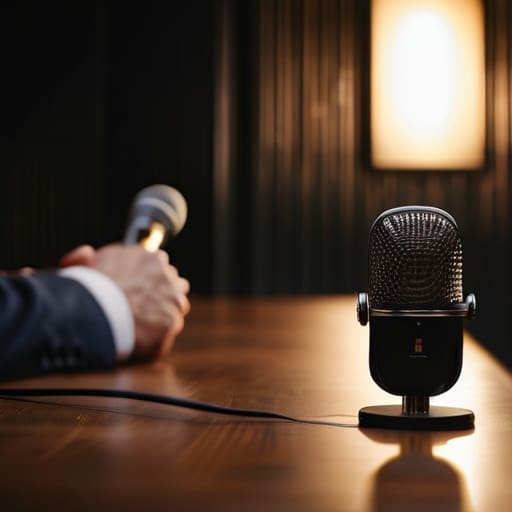
At the end of the day, asking the hard question isn’t about being a provocateur or catching someone in a lie. It is about the technical application of what we have discussed: using emotional intelligence to read the room, staying anchored through the silence, and ensuring your delivery doesn’t trigger a fight-or-flight response before they can even process the inquiry. If you manage the tension correctly, you aren’t attacking the guest; you are simply clearing the debris so the actual truth can come through. It is a balancing act of precision, much like setting your gain levels—too low and you miss the nuance, too high and you blow everything out.
Don’t let the fear of a heavy silence or a momentary flash of discomfort stop you from pursuing the thread. I have spent decades sitting in dark booths listening to people stumble through their defenses, and I can tell you that the most profound moments in audio almost always happen immediately after the awkwardness. The craft isn’t about being fearless; it is about being prepared enough to sit in that discomfort without flinching. Go ahead and ask it. The best stories are usually hiding just behind the questions we are most afraid to pose.




