

I remember sitting in a tiny, soundproofed booth in Birmingham back in the late nineties, watching a guest go on a twenty-minute tangent about his collection of vintage fountain pens while the actual interview topic sat gathering dust. I sat there, paralyzed, staring at the levels on the monitor, terrified that if I spoke, I’d ruin the recording. Most “communication experts” will tell you that you need a masterclass in active listening or some complex psychological framework to manage a conversation, but let’s be honest: when you’re mid-recording and the clock is ticking, you just need to know how to interrupt politely without making the guest feel like they’ve been slapped.
I’m not here to sell you a seminar or a leather-bound journal on social grace. I’ve spent twenty years in the edit suite, and I can tell you that the best way to steer a conversation isn’t through some magic phrase, but through calculated timing and subtle vocal cues. I’m going to give you the actual mechanics of it—the specific verbal bridges and the non-verbal nudges that work in a real studio environment. We’re going to skip the fluff and focus on how to reclaim your narrative without killing the vibe.
Mastering Nonverbal Cues for Speaking Before You Open Your Mouth
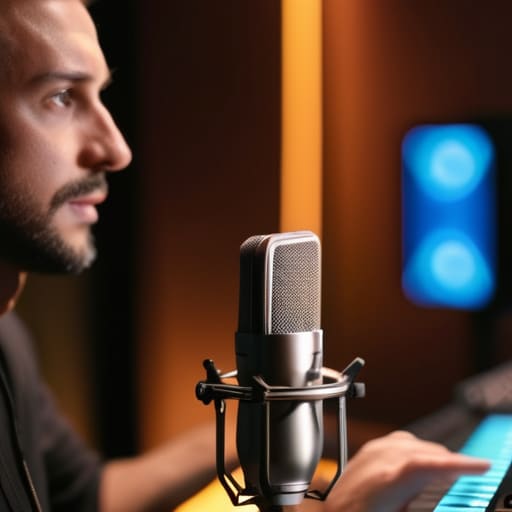
Before you even think about making a sound, you need to learn how to read the room. I’ve sat through countless recording sessions where a producer tried to jump in mid-sentence because they thought they saw a gap, only to realize they completely killed the guest’s momentum. Mastering nonverbal cues for speaking is about timing the energy, not just the silence. If a guest is leaning in, gesturing broadly, or picking up speed, they aren’t finished; they’re building to a point. Even if there’s a momentary pause, don’t mistake a breath for an invitation.
Instead, use your body language to signal your intent. A slight lean forward or a subtle nod acts as a way of planting your flag in the conversation without being disruptive. It’s one of those soft skills for meetings that people overlook, but in a high-stakes interview, it’s the difference between a smooth transition and a jarring collision. You want to signal that you are ready to engage, creating a visual bridge that tells the speaker, “I’m here, and I’ve got something to add,” so the actual verbal entry feels earned rather than forced.
Using Active Listening Techniques to Find the Right Gap

You can’t just wait for a vacuum of silence to jump in; in a good interview or a heated panel, that vacuum might not happen for twenty minutes. Instead, you have to use active listening techniques to track the speaker’s breath and cadence. I spend half my life listening to raw audio, and I’ve learned that people almost always signal a transition with a specific kind of exhale or a slight drop in pitch. If you’re watching for those micro-pauses, you aren’t just waiting to speak—you’re mapping the rhythm of the conversation.
It’s less about social etiquette for conversations and more about predicting the landing. If your guest is mid-sentence but their energy is flagging, or if they’ve just finished a complex thought and are looking to you for a reaction, that is your window. Don’t wait for them to stop talking entirely, or you’ll kill the momentum. You’re looking for the natural breath gap. If you time it right, your entry feels like a continuation of their thought rather than a collision, which is the difference between a seamless flow and a jarring edit.
Five ways to break in without killing the momentum
- Use a verbal “bridge” instead of just jumping in. Don’t just start talking; use a short, low-impact phrase like “If I could just jump in there for a second” or “Building on that point.” It gives the speaker’s brain a millisecond to register that a handoff is happening.
- Watch your volume levels. One of the biggest mistakes I see in amateur productions is the interrupter coming in at a higher decibel than the person they are interrupting. It sounds like an assault, not a conversation. Aim to match their energy, then slowly pivot to your point.
- The “Wait for the Breath” technique. Most people take a micro-pause to inhale before starting a new sentence or after finishing a thought. If you time your entry to that specific inhalation, you aren’t cutting them off; you’re just catching the baton during the handoff.
- Keep your first sentence lean. If you interrupt with a three-sentence preamble about why you want to speak, you’ve already lost the thread of the original conversation. State your pivot in ten words or less, then let the dialogue settle.
- If you accidentally steamroll, own it immediately. If you realize you’ve cut someone off mid-sentence, don’t keep talking. Stop, say “Sorry, go ahead, you were saying?”, and actually let them finish. It preserves the rapport and keeps the recording from feeling combative.
The Bottom Line

Don’t wait for a silent vacuum to speak; look for the rhythmic breath or the slight pitch drop that signals a natural transition point.
If you have to jump in, keep your verbal entry short—use a quick “Exactly” or “To your point” to anchor yourself before you actually pivot the conversation.
If you realize you’ve cut off a guest mid-thought, don’t make a big production of apologizing; just pause, hand the floor back immediately, and let them finish the sentence.
## The rhythm of the conversation
“Don’t wait for a dramatic pause that isn’t coming; just learn to catch the breath between their thoughts. If you wait for total silence, you aren’t producing a conversation, you’re just managing a series of monologues.”
Nadine Okafor
The Bottom Line
At the end of the day, managing a conversation isn’t about following a rigid script; it’s about reading the room and the waveform. You’ve learned how to use your body language to signal intent, how to lean into the silence to find a natural breath, and how to listen so intently that you aren’t just waiting for your turn to speak, but actually identifying the logic of the guest’s point. If you can master those subtle shifts, you stop being a nuisance and start being a facilitator. Remember, the goal isn’t to hijack the mic, but to steer the energy toward something meaningful before the momentum dies in a long, rambling tangent.
Don’t beat yourself up when you inevitably trip over your words or cut someone off a second too early. I’ve been doing this for twenty years, and I still have moments where I feel like a complete amateur because I missed a beat. The difference between a hobbyist and a professional is that the professional knows how to recover gracefully without letting the awkwardness derail the entire recording session. Podcasting is a messy, unpredictable medium, and your job is simply to provide the structure that lets the truth come out. Just keep your ears open, keep your ego small, and keep recording.




