

I spent three years in my twenties trying to launch what I thought would be a “definitive” audio documentary series, only to realize I was paralyzed by the sheer scale of my own ego. I had the expensive mics, the fancy pre-amps, and a notebook full of grand ideas, but I produced exactly zero minutes of usable audio because I was too busy trying to build a monument instead of just recording a conversation. Most productivity gurus will tell you that you need a rigorous system or a life-changing workflow to stay consistent, but they’re usually the ones selling you a $500 masterclass. The truth about how to make something small every week isn’t about discipline or “optimizing your output”; it’s about lowering your standards until they’re actually achievable.
I’m not here to give you a roadmap to greatness or a motivational speech to get you through a Monday. I want to talk about the unglamorous, gritty mechanics of staying in the game when the initial excitement wears off and the silence from your audience starts to feel heavy. I’ll show you how to strip your process down to the bare essentials so you can stop overthinking and start finishing. This is about building a sustainable habit that survives the inevitable months when you feel like nothing you do actually matters.
Building Creative Habits When the Motivation Runs Dry

Motivation is a fickle, unreliable collaborator. If you wait for a lightning bolt of inspiration to strike before you sit down at your DAW or open your script, you’ll spend most of your career staring at a blank timeline. In my experience, the most effective way to stay afloat is through low-stakes creative practice. This means giving yourself permission to produce something that is objectively mediocre. I’ve learned that a ten-minute rough cut of a single interview segment is worth more than three weeks of “planning” a masterpiece that never gets recorded.
When the spark is gone, stop trying to be an artist and start being a technician. Use micro-productivity techniques to lower the barrier to entry. Instead of saying “I need to produce an episode,” tell yourself you are just going to organize your folder structure or label five audio clips. It sounds trivial, but it keeps the gears turning. You aren’t looking for a breakthrough; you are just maintaining the mechanical rhythm of the work. Once the files are open and the headphones are on, the hardest part of the job is usually already behind you.
Micro Productivity Techniques for the Brutally Realistic
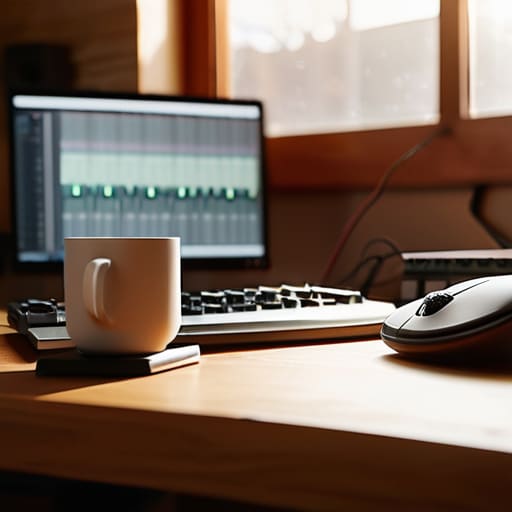
Stop trying to schedule “creative time.” It’s too vague and usually ends with you staring at a blank DAW window for three hours. Instead, use micro-productivity techniques that actually fit into a life that has bills and laundry. If you can’t produce a full ten-minute segment, fine. Spend twenty minutes just cleaning up the breaths in a single audio file or organizing your folder structure. It feels like busywork, but it’s actually low-stakes creative practice that keeps your hands moving.
The goal isn’t a finished masterpiece; it’s preventing the atrophy that happens when you go dark for a month. I used to think I needed a four-hour block of silence to do “real” work, but that’s a lie that leads to burnout. I’ve found more success in incremental skill development—spending fifteen minutes learning one specific compression setting or a new EQ trick. If you can commit to one tiny, technical task every Tuesday, you aren’t just staying busy; you’re building the muscle memory required to actually finish a project when the real momentum finally hits.
Five Ways to Stop Overthinking and Start Shipping
- Lower your production value expectations. I spent three weeks once trying to perfect the reverb on a single transition, only to realize the listener was on a subway in New York with one earbud in. If it’s a small weekly task, aim for “good enough to not be distracting” rather than “studio grade.”
- Set a hard timer for the “tinkering” phase. If you’re editing a segment, give yourself exactly 45 minutes to clean up the breaths and the mouth clicks. When the timer goes off, you move on. You can always go back for a polish later, but usually, you won’t, and that’s fine.
- Create a “Done” folder. Every time you finish a tiny piece of work—a 30-second intro, a single interview edit, a rough outline—drop it into a dedicated folder. When the inevitable mid-season slump hits and you feel like you’ve achieved nothing, look at that folder. It’s proof of life.
- Use a template for everything. Don’t reinvent the wheel every Monday. Have your DAW project pre-loaded with your EQ, compression, and limiter settings already dialed in for your specific mic. If you spend twenty minutes just setting up your workspace, you’ve already lost the momentum for the actual work.
- Accept the “Bad Episode” as a unit of progress. Some weeks you’ll produce something that feels thin or uninspired. Ship it anyway. The goal isn’t to have a perfect archive; the goal is to maintain the mechanical rhythm of finishing. You can’t fix a podcast that doesn’t exist.
The Bottom Line
Stop waiting for a “flow state” to start your edit; just commit to thirty minutes of cleaning up room tone or trimming dead air, because momentum usually follows the work, not the other way around.
Lower your production bar until it’s impossible to fail—it is better to release a functional, slightly uneven ten-minute episode than to spend six months polishing a masterpiece that never sees the light of day.
Treat your weekly output like a technical requirement rather than a creative choice; if you decide you’re making a weekly show, the goal isn’t brilliance, it’s simply meeting the deadline.
The Myth of the Grand Launch
Stop waiting for the perfect three-hour block of silence and a high-end studio setup to start; if you can’t find fifteen minutes to edit a single clean transition or write one decent intro, you aren’t going to find the stamina to produce a season.
Nadine Okafor
The Long Game of Small Wins

Look, I’m not going to tell you that these micro-habits will turn you into a superstar overnight. They won’t. But what they will do is prevent the kind of total creative paralysis that kills more podcasts than bad audio ever could. By focusing on one tiny, manageable output—whether that’s a sixty-second audio clip, a single paragraph of a script, or just cleaning your microphone filters—you are essentially building the muscle memory required to stay in the game. You’re moving past the stage of grand, theoretical plans and into the gritty reality of actual production. It’s about consistency over intensity, every single time.
There will be weeks where your “small thing” is just showing up to your desk and staring at a blank waveform for twenty minutes. That’s fine. Don’t let the gap between your ambition and your current output make you quit. Most people fail because they try to sprint a marathon and end up gasping for air by mile three. If you can just keep producing these small, imperfect increments, you’ll eventually look back and realize you’ve built something substantial without even noticing the momentum shifting. Just keep the tape rolling, even when it feels like you’re recording into a vacuum.




