

I once spent six months working on a true-crime series with a partner who was brilliant at research but possessed the professional reliability of a weather vane in a hurricane. We had the “vision,” we had the “synergy,” and we had a shared Google Doc that eventually became a graveyard of half-finished thoughts. Everyone tells you that you need a shared mission statement or a complex project management framework to succeed, but they never tell you that learning how to work with a collaborator is actually about figuring out who is going to handle the unpleasant, granular tasks when the initial excitement inevitably evaporates. Most of the advice out there is just high-level fluff designed to sell you a productivity seminar, ignoring the reality that most partnerships fail because of simple, logistical friction.
I’m not here to give you a roadmap to a “dream team.” Instead, I’m going to tell you what actually happens when the microphones are turned off and the deadlines start looming. I’ll walk you through the specific, unglamorous ways to divide labor, how to set boundaries that don’t kill the creative spark, and how to spot a dead-weight partner before you’ve wasted a year of your life.
Defining Shared Goals Before the Ego Takes Over

Before you even touch a microphone, you need to sit down and actually talk about what this thing is. I’ve seen too many duos start a show because they both like the same niche topic, only to implode six months later because one person wanted a hobby and the other wanted a career. You aren’t just picking a topic; you are defining shared goals that dictate every single decision you make from here on out. If one of you wants to spend forty hours a week on deep-dive research and the other just wants to riff for twenty minutes while driving to work, you are heading for a collision.
Don’t mistake “having a similar vibe” for having a shared vision. You need to be blunt about the output. Is this a monetized business or a passion project? Are we releasing weekly or monthly? Once you decide, you have to build your collaborative workflow tools around those specific realities. If you don’t align on the scale of the ambition early on, you’ll spend your entire partnership fighting over why the edit isn’t “perfect” enough or why the release schedule is slipping.
Establishing Boundaries in Teamwork to Prevent Burnout

You need to decide right now who owns which part of the process, or you’ll end up in a loop of endless, circular revisions. I’ve seen too many duos spend four hours arguing over a single transition because they never actually sat down to discuss establishing boundaries in teamwork. If you are the one doing the heavy lifting on the edit, you shouldn’t be asking permission to cut a three-second silence. You need to agree on a “final say” protocol for different stages—one person owns the technical mix, the other owns the narrative arc. Without that, you aren’t collaborating; you’re just two people tripping over each other’s feet.
This isn’t about being bossy; it’s about survival. You also need to implement effective feedback loops that don’t feel like personal attacks. Instead of saying “this sounds bad,” use a system where you flag specific timestamps and explain why they don’t serve the episode. I personally use a shared sheet for notes to keep the “creative critiques” separate from the “technical fixes.” If you don’t separate the two, you’ll find yourself avoiding your partner’s messages because you’re dreading the emotional tax of the conversation.
The Mechanics of Not Killing Each Other
- Decide who has the final cut on the edit. You can’t have two people fighting over whether a three-second silence is “atmospheric” or just “awkward” for forty minutes. Pick a lead editor and a lead producer. If you try to make every decision a democracy, you’ll spend six hours debating a single transition and end up with a show that sounds like a committee wrote it.
- Build a shared asset folder that actually makes sense. I’ve wasted too many hours in my life hunting through a collaborator’s “Final_v2_REAL_final.wav” files. Use a single, organized Dropbox or Google Drive structure from day one. If your music beds, raw tracks, and exported masters aren’t in predictable folders, you aren’t collaborating; you’re just performing digital archaeology.
- Set a hard “release or kill” date for your pilot phase. Don’t commit to a twenty-episode season before you’ve actually sat in a room (or a Zoom call) and produced three episodes together. You need to know if your workflow actually meshes when the technical glitches start happening. If you can’t survive the production of episode three, you won’t survive the eight months of silence that usually follows.
- Create a “Kill List” for your shared vision. In my work, I keep a list of perfect sentences I have to cut because they don’t serve the story. You and your partner need a version of this for your show’s direction. If an idea is brilliant but doesn’t fit the core premise you agreed on, it gets cut. Agree now that “cool ideas” are secondary to the actual mission of the show.
- Automate the boring stuff so you can focus on the audio. If you are spending half your time emailing each other about scheduling or checking if a file uploaded, you’re burning the energy you need for the craft. Use a shared Trello board or a simple Notion page to track what’s recorded, what’s being edited, and what’s ready for distribution. If it’s not on the board, it doesn’t exist.
The Reality Check: Three Things to Carry Forward
Stop talking about “vision” and start talking about logistics; if you haven’t agreed on who handles the RSS feed and who spends Sunday nights cleaning up audio files, you don’t have a partnership, you have a looming argument.
Build a “kill switch” into your agreement—decide now, while you still like each other, exactly how you will untangle your shared assets and intellectual property if one of you decides to walk away.
Protect your actual production time by setting hard limits on “creative brainstorming” sessions; too much time spent debating the color of your cover art is just a way to avoid the actual, difficult work of editing.
The Myth of the Creative Soulmate
Stop looking for a creative twin who thinks exactly like you; that’s a recipe for a circular argument that ends in a dead mic. You don’t need a mirror, you need a counterweight—someone who is willing to argue about the pacing of a transition or the placement of a music bed until the work actually functions.
Nadine Okafor
The Reality Check
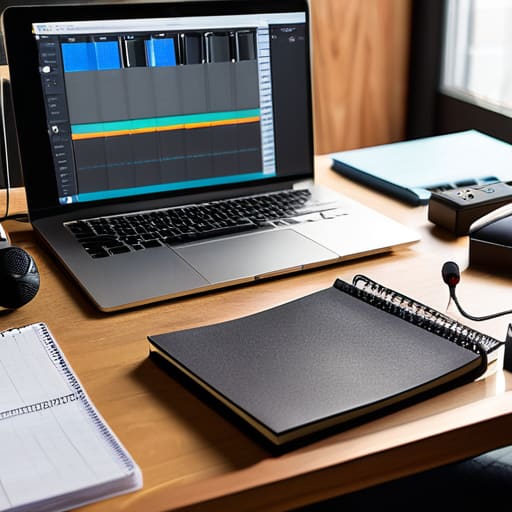
At the end of the day, a successful collaboration isn’t about having a shared vision board or a fancy logo; it’s about the unglamorous logistics. It’s about knowing exactly who is responsible for the actual heavy lifting—the file backups, the show notes, and the tedious task of cleaning up mouth clicks—before you even hit record. If you haven’t sat down to hash out your shared goals and set hard boundaries for your personal time, you aren’t building a partnership; you’re just building a resentment engine. You need to treat the business side of the relationship with the same technical precision you apply to your gain stages and EQ settings.
Look, there will be weeks when the guest cancels, the hosting platform glitches, or you both realize the concept is thinner than you thought. That is where the real work happens. Don’t let a bad edit or a disagreement over a transition make you think the whole project is a failure. Podcasting is a marathon of attrition, and having someone in the trenches with you makes the eight months of silence much easier to stomach. If you can navigate the friction of working together, you’ll find that the final product is almost always better than anything you could have cut alone in your spare room.




