
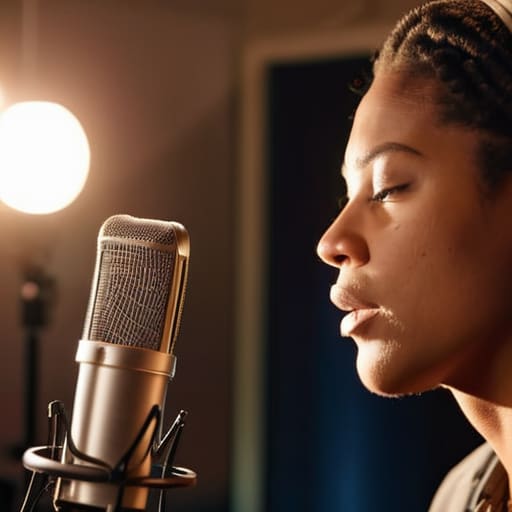
I remember sitting in a cramped, drafty studio in Birmingham back in the late nineties, staring at a single, expensive condenser mic and two guests who were currently arguing about where to order lunch. I had been told that if I just bought the right pre-amps and followed a “professional” positioning guide, the audio would be pristine. It wasn’t. One guest was leaning in too close, the other was practically in the next room, and the resulting file was a nightmare of uneven levels and room echo. People love to sell you expensive gear as the solution to learning how to record two people on one microphone, but they’re lying. The gear won’t fix a bad setup; it’ll just record a bad setup in higher resolution.
I’m not here to sell you a masterclass or a list of overpriced hardware. I want to talk about the actual physics of it: the distance between mouths, the angle of the capsule, and why your choice of room matters more than your budget. I’m going to show you the specific settings and spatial tricks I use to ensure both voices sit level in the mix without sounding like they’re trapped in a tin can.
Mastering Microphone Placement for Interviews Without Expensive Gear
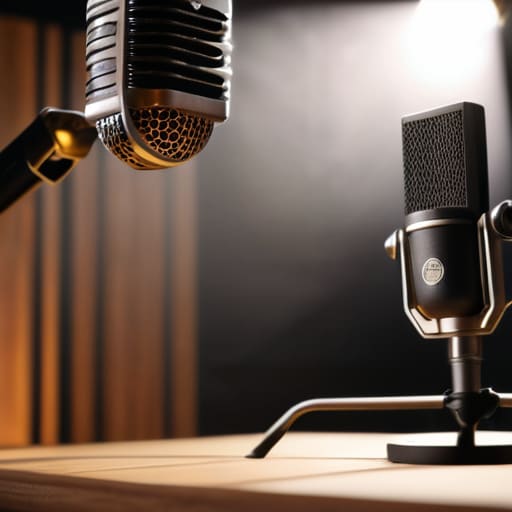
If you’re stuck with a single mic, you can’t just stick it in the middle of the table and hope for the best. You have to manage the proximity effect in recording, which is just a fancy way of saying that the closer someone gets to the capsule, the more their voice turns into a bassy, boomy mess. If one person leans in to make a point and the other leans back to take a sip of water, your audio level balancing is going to be a nightmare in post-production. I’ve spent way too many hours trying to fix uneven volumes that could have been avoided if the guests had just stayed put.
Try to position the mic at a slight angle between the two speakers rather than dead center. This helps with minimizing room reverb because the mic is focusing more on the direct sound of the voices and less on the reflections bouncing off your walls. If you’re podcasting with limited equipment, your best friend is a heavy blanket or a rug placed under the table. It’s not glamorous, but it stops the sound from bouncing off the floor and making your interview sound like it was recorded in a tin can.
Why Proximity Effect in Recording Will Make or Break You
Here is the problem most beginners run into when they start podcasting with limited equipment: they think getting closer to the mic makes them sound “intimate” or “professional,” but they don’t realize they are actually triggering the proximity effect in recording. When you use a single microphone for two people, that proximity effect is going to be your biggest headache. As a guest leans in to whisper something confidential, their low-end frequencies are going to spike, making them sound like they’re speaking through a heavy wool blanket.
If you don’t manage this, your audio level balancing becomes an absolute nightmare in post-production. You’ll spend three hours trying to EQ out a muddy, boomy bass response from one person just to make them audible, only to find the other person sounds thin and tinny because they stayed six inches further back. You can’t just “fix it in the mix” if the physics of the room and the mic have already ruined the signal. You have to find that sweet spot where both voices have a consistent tonal weight before you even hit the record button.
Five ways to stop your single-mic setup from sounding like a mess
- Watch your levels for the “loudest” person. In a two-person setup, one person is almost always a talker while the other is a listener. If you set your gain based on the loud person, the quiet one will be buried in the noise floor. Aim for your peaks to hit around -6dB to -12dB, but keep a close eye on that quieter guest to ensure they aren’t sitting at -30dB.
- Use the “Triangle Rule” for distance. Don’t let your guests sit directly across from each other like they’re at a dining table; that creates a massive dead zone in the middle of the mic. Instead, have them sit at an angle, forming a triangle with the microphone at the apex. This keeps both voices within a similar radius of the capsule.
- Kill the reflections before you hit record. If you’re using one mic, you’re essentially using it as a vacuum for every sound in the room. If you have hard walls or a glass coffee table between the guests and the mic, you’re going to hear every bounce. Throw a heavy rug down or even hang a couple of thick blankets behind the guests to soak up that bounce.
- Mind the “head-turning” habit. People naturally turn their heads away from the mic when they laugh or think. In a single-mic setup, a three-inch turn can mean the difference between a clear sentence and a muffled mess. Tell your guests early on: “Keep your chin pointed toward the mic, even when you’re reacting.”
- Check your phase if you’re using a stereo mic. If you’re using a mic with a stereo pattern (like an X/Y setup) to capture two people, make sure you aren’t getting weird hollow sounds. If the voices sound like they’re underwater or “thin,” you’ve got phase cancellation issues. For two people, you’re almost always better off sticking to a tight cardioid pattern to keep the focus narrow and direct.
The Bottom Line
Stop obsessing over the exact angle of the mic and start obsessing over the room; if you have hard walls and zero soft surfaces, no amount of clever positioning is going to stop that hollow, echoing sound.
Keep your guests at a consistent distance from the capsule—if one person leans in to tell a secret and the other sits back to laugh, your volume levels will be a nightmare to fix in post.
Use the proximity effect to your advantage by keeping people close enough to get that warmth, but don’t let them get so close that their “P” and “B” sounds turn into literal explosions in your waveform.
The Hard Truth About Single-Mic Setups
“You can spend three hours obsessing over the exact angle of the mic, but if you don’t account for the person who leans back and moves six inches away mid-sentence, you’re just going to spend the next six hours in your DAW trying to fix a volume imbalance that shouldn’t have happened in the first place.”
Nadine Okafor
Getting it Done
At the end of the day, recording two people on one mic is a game of managing physics and compromise. You’ve got to control your environment to kill the room reverb, find that sweet spot in the mic placement so one person isn’t drowning while the other is a whisper, and keep a very close eye on the proximity effect so you don’t end up with a muddy mess of low-end frequencies. It’s not about having a studio that costs more than your car; it’s about understanding how sound behaves in the space you actually have. If you get the placement right and keep the guests from leaning too far back, you can produce a clean, listenable episode without needing a second channel or a massive budget.
Don’t let the technical hurdles stop you from actually hitting record. I spent my first year obsessing over gear I couldn’t afford, only to realize that the story is what keeps people listening, not the pristine silence between sentences. You will mess up the levels, you will have to fix a weird pop in post-production, and you will occasionally realize you placed the mic too close to a noisy radiator. That’s just part of the job. Get the recording done, get the content out there, and learn the technical side through the mistakes. The craft is built one imperfect episode at a time.




