

I was sitting in a dimly lit studio in Birmingham about fifteen years ago, staring at a waveform that looked like a flatline, listening to a guest give the exact same rehearsed anecdote they’d given on every other show in the genre. It was soul-crushing. You can have the most expensive Neumann microphone in the world and a room treated with professional-grade foam, but if your interview is just a series of predictable prompts, you’re just recording expensive noise. Most people think they need a complex psychological framework or a masterclass to learn how to avoid asking what everyone asks, but they’re looking in the wrong direction. They’re looking for a magic formula when they should be looking at their own prep work.
I’m not here to sell you a $500 seminar on “curiosity engineering.” I’ve spent two decades in the trenches, cutting out the fluff and keeping a running list of the gems that actually land, and I want to show you what I’ve learned. I’m going to give you the actual mechanics of how to avoid asking what everyone asks by changing your research habits and, more importantly, how you listen to the answers. This isn’t about being clever; it’s about being prepared enough to stop being predictable.
Ditching Small Talk Clichs for Real Human Connection

The problem with most interviews is that they start with a polite, scripted dance that goes nowhere. You ask where they grew up, they give you the Wikipedia version, and you both sit there pretending this is a meaningful exchange. When you spend twenty minutes avoiding small talk clichés, you aren’t being polite; you’re wasting the limited cognitive energy your guest has. I’ve sat through countless recordings where the first fifteen minutes were nothing but weather reports and “how’s the coffee?” If you want something worth editing, you have to break that rhythm early.
Instead of following a predictable arc, try using unconventional inquiry methods to bypass the rehearsed answers. If a guest gives you a canned response, don’t just nod and move to question three. That’s where you apply some actual critical thinking for interviews. Dig into the “why” behind the “what.” If they mention a failure, don’t ask how they overcame it—ask what the specific moment of realization felt like in their gut. That’s how you move from a standard Q&A to a piece of audio that actually keeps people listening.
Using Unconventional Inquiry Methods to Break the Pattern

If you want to get past the rehearsed script, you have to stop treating your interview like a deposition and start treating it like a collaborative investigation. I’ve spent years sitting in dark booths listening to guests give the same sanitized, “LinkedIn-ready” answers. To break that cycle, you need to employ unconventional inquiry methods that force them to pivot. Instead of asking “How did you start?”, try asking “What was the moment you realized your original plan was a complete disaster?” It shifts the brain from retrieval mode—where they pull up the prepared speech—to processing mode, which is where the actual truth lives.
This requires a level of intellectual curiosity in dialogue that most people find intimidating. You aren’t just looking for a quote; you are looking for the friction. When a guest gives you a polished, surface-level response, don’t just move to your next pre-written question. Sit with the silence for three seconds. Often, the most profound insights come when you use a follow-up that targets the logic behind their reasoning rather than the facts of their biography. That is how you move from a standard Q&A to a real piece of audio.
Five ways to stop being a human Google search
- Audit your own prep work. If you find yourself writing a question that could be answered by a three-second glance at a Wikipedia summary or a guest’s LinkedIn bio, delete it immediately. You aren’t there to verify their resume; you’re there to find the perspective that isn’t already indexed by a search engine.
- Use the “Why” behind the “What.” When a guest gives you a standard, polished answer—the kind they’ve given on five other shows—don’t move to the next question on your list. Stop. Ask them why they believe that, or ask them to describe the moment that belief actually changed. That’s where the real audio lives.
- Listen for the pivots. The best questions usually aren’t on your prepared list; they are reactions to something the guest just said. If they mention a specific failure or a weird detail in passing, follow that thread. Most producers are too busy looking at their notes to hear the actual gold being dropped in the middle of a sentence.
- Embrace the uncomfortable silence. After a guest finishes an answer, count to three in your head before you speak. Often, they’ll feel the need to fill that gap, and that’s when they drop the nuance or the truth they were originally trying to polish away. It feels awkward, but in the edit, it’s pure signal.
- Research the gaps, not the highlights. Don’t just read what people say about your guest; look for what people don’t talk about. If they are a celebrated expert in X, don’t ask them about X. Ask them about the time X failed them, or the thing about their field that everyone else seems to be ignoring.
The Producer’s Cheat Sheet for Better Interviews
If your question can be answered with a single sentence or a Google search, delete it from your script; you aren’t interviewing them, you’re just reading a Wikipedia entry aloud.
Embrace the awkward silence after a guest finishes speaking; that’s usually when they stop giving the rehearsed PR answer and start telling you something actually worth recording.
Stop trying to “manage” the conversation and start listening for the tangents—the most interesting gold is almost always buried in the stuff that wasn’t on your prepared list.
The Google Search Trap
If your interview script looks like the first page of a Google search for your guest’s name, you aren’t a producer; you’re a stenographer. Real insight lives in the follow-up question you were too afraid to ask because you were too busy trying to stay on schedule.
Nadine Okafor
The Hard Truth About Great Interviews
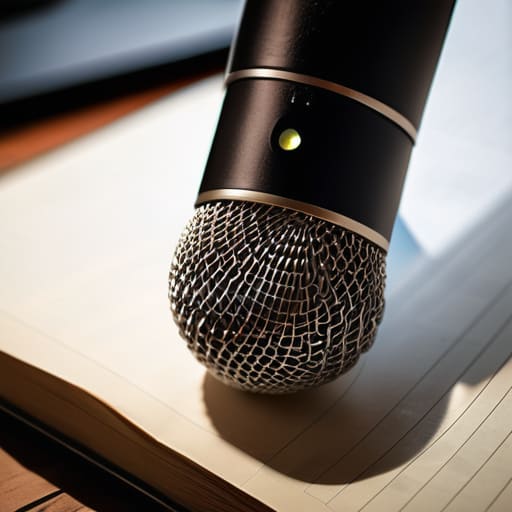
At the end of the day, moving past the predictable requires more than just a clever list of questions; it requires the discipline to stop acting like a stenographer and start acting like a producer. You have to do the heavy lifting in the research phase so that you aren’t leaning on those generic, safe inquiries that every other podcaster uses to fill the silence. It means embracing the uncomfortable pauses and the non-linear paths that often lead to the most honest moments. If you aren’t willing to ditch the script and follow the thread of a guest’s actual lived experience, you’re just going to end up with another episode that sounds like a press release.
Don’t get discouraged if your first few attempts feel awkward or if you stumble over a silence that lasts three seconds too long. I spent my first year thinking every gap in conversation was a failure, when really, it was often the only space where the truth could breathe. The goal isn’t to be a polished broadcaster; it’s to be a curious human being who has done the work. The craft is messy, and the best parts of your show will likely be the things you didn’t plan for. Just keep listening, keep digging, and for heaven’s sake, stop asking people how they got started.




