
I’ve sat through enough “masterclasses” to know that most of them are just expensive ways to repackage common sense into a twenty-step framework that nobody actually uses. They’ll tell you that you need a complex narrative arc or a proprietary storytelling system to stay on track, but that’s mostly nonsense designed to sell a PDF. The truth is much more boring: if you don’t have a concrete map before you hit the record button, you aren’t “finding your voice,” you’re just making a mess. Learning how to structure a solo episode without rambling isn’t about being a literary genius; it’s about preventing that specific, soul-crushing moment in the edit where you realize you’ve spent ten minutes circling a point you should have made in thirty seconds.
I’m not here to give you a motivational speech or a complicated template that takes three hours to fill out. I want to show you the practical, unglamorous mechanics of building a skeleton for your thoughts so your episodes actually have a spine. I’ll walk you through the specific ways I organize my own notes and how to spot the dead ends before they happen, so you can stop wasting time in the edit and start producing shows that people actually finish.
Ditching the Script for Real Podcast Scriptwriting Techniques
If you show up to the mic with a full, word-for-word script, you’re going to sound like a telemarketer. I’ve seen it a hundred times: the producer reads every syllable, the life drains out of the performance, and suddenly you’re spending four hours in post-production trying to fix the robotic cadence. Instead, you need to move toward more fluid podcast scriptwriting techniques that prioritize your natural voice.
I usually swear by a hybrid approach. I don’t use a rigid solo podcast outline template; I use a “bulleted roadmap.” You write down your core thesis, three to five non-negotiable talking points, and the specific transitions you need to hit to move from one idea to the next. This keeps you on track without making you sound like you’re reading a grocery list.
The goal here is improving podcast pacing by knowing exactly where your episode is headed before you even hit record. If you have your “anchor points” ready, you won’t find yourself circling the same point for ten minutes. You’ll know when to stop, which is often the hardest part of solo recording.
Using a Solo Podcast Outline Template to Stop the Drift
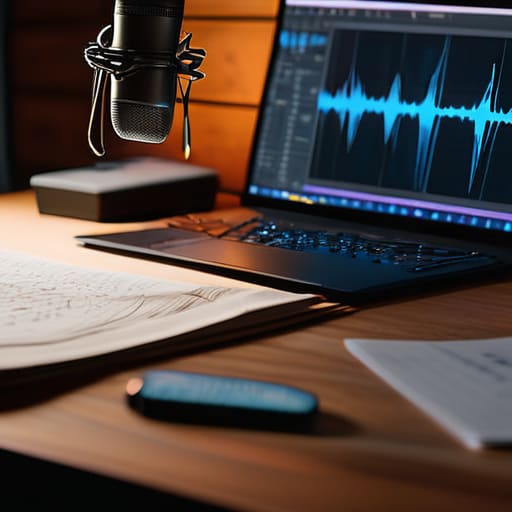
I don’t care if you use a digital app or a legal pad with coffee stains; you need a physical solo podcast outline template to act as your guardrails. Without one, you aren’t recording an episode; you’re just performing an unplanned monologue. I’ve spent too many late nights in my studio staring at waveforms that look like a mountain range because I let myself drift. When you lack a skeleton, you tend to loop back to the same point three times, thinking you’re adding depth when you’re actually just circling the drain.
The goal isn’t to write a teleprompter script—that’s how you end up sounding like a robot reading a manual. Instead, use your outline to map out the logical leaps. If you’re moving from Point A to Point B, write down the specific bridge sentence you intend to use. This is one of my favorite solo podcast engagement tips because it prevents that awkward, heavy silence where you’re clearly searching for your next thought. It keeps the momentum moving forward so the listener doesn’t feel the urge to hit the skip button halfway through.
Five ways to keep your solo episodes from turning into a monologue
- Record your “anchor points” first. Don’t try to write a word-for-word script unless you want to sound like a GPS navigator; instead, write down the three or four non-negotiable conclusions you need to reach. If you know exactly where the finish line is, you’re much less likely to wander into the weeds halfway through.
- Use a physical timer on your desk, not just the one in your DAW. When you’re deep in a thought, you lose all sense of temporal reality. If you tell yourself you have five minutes to cover “The History of Compression,” and you see that timer hitting the four-minute mark while you’re still on the intro, you’ll know to wrap it up.
- Embrace the “Hard Cut” in your planning. If a sub-topic doesn’t directly serve the central thesis of the episode, kill it before you even hit record. I have a graveyard of perfect, insightful sentences that I’ve had to cut because they were beautiful diversions that actually broke the episode’s momentum.
- Talk to one specific person, not “the audience.” When you aim for a general crowd, you start using that vague, professorial tone that leads to rambling. If you imagine you’re explaining the concept to a specific colleague or a friend, your language stays tighter and your pacing stays natural.
- Leave “breathing room” in your outline for the inevitable tangents. If you over-schedule every single second, you’ll either sound robotic or you’ll panic when you deviate. Build in intentional gaps where you can expand on a thought, but once that gap is filled, move to the next heading immediately.
The Bottom Line
Stop trying to write a verbatim script; you’ll end up sounding like a reading machine, and the moment you stumble, you’ll lose your rhythm and spend three hours trying to edit out the tension.
Map your episode using “anchor points”—specific, non-negotiable facts or stories—so that even if you drift off-topic, you have a clear North Star to pull you back into the structure.
Record a five-minute “garbage take” before your actual session to find your baseline energy and identify where your natural tangents tend to spiral out of control.
The Trap of the 'Flow State'
People tell you to ‘just get into a flow state,’ but in a solo episode, a flow state is usually just a polite way of saying you’ve spent twenty minutes circling a point you should have made in thirty seconds. If you don’t have a roadmap, you aren’t performing; you’re just wandering around your own thoughts, and your listener is the one who has to pay the price in wasted time.
Nadine Okafor
The Reality of the Edit
At the end of the day, structure isn’t about being a robot or following a rigid script that kills your personality. It’s about building a scaffold so that when you inevitably go off on a tangent—and you will—you actually have a way to find your way back to the point. You’ve got your outline to keep you on track, you’ve ditched the word-for-word script that makes you sound like a customer service manual, and you’ve learned how to map your ideas before the red light goes on. If you do these things, you won’t spend six hours in a DAW trying to cut out every single “um,” “ah,” and “so anyway” just to make a ten-minute episode listenable. Control the drift before you record, or you’ll spend your entire life fighting the edit instead of actually creating.
Look, there will still be episodes that feel messy. There will be days when the structure fails and you end up staring at a waveform that looks like a mountain range of wasted breath. That’s fine. Even after all these years, I still have a folder of “perfect” sentences that had to be cut because they didn’t serve the story. The goal isn’t perfection; it’s intentionality. Once you stop treating your solo episodes like a stream-of-consciousness diary and start treating them like a piece of constructed audio, everything changes. You’ll stop being a person talking into a mic and start being a producer. Just get the structure right, and the rest of the craft will follow.




