

I remember sitting in a cramped, poorly insulated studio in Birmingham, watching the levels on my monitor dance while a guest spent twelve minutes explaining the specific mechanics of his sourdough starter. I had a killer interview lined up about urban planning, but there I was, nodding politely while my internal clock screamed. You’ll see plenty of “experts” online telling you to buy expensive coaching programs to learn “advanced conversational redirection,” but let’s be real: that’s nonsense. Learning how to handle a guest who goes off topic isn’t about psychological manipulation or high-level seminar tactics; it’s about having the guts to steer the ship before you’ve wasted forty minutes of precious airtime.
I’m not here to sell you a masterclass or promise that you’ll become a conversational wizard overnight. What I am going to do is give you the actual, unglamorous tools I’ve used over twenty years of editing and producing. We’re going to talk about the physical cues you can use to signal a transition, how to phrase an interruption so you don’t sound like a jerk, and when to just bite the bullet and cut the whole mess in post. No fluff, just the stuff that keeps your episodes from becoming an accidental comedy of errors.
Mastering Podcast Host Redirection Techniques Without the Awkwardness

The biggest mistake I see new hosts make is thinking they have to be a passive listener to be “polite.” If you let a guest wander into a twenty-minute monologue about their sourdough starter when you were supposed to be discussing urban planning, you aren’t being a good host; you’re being a bad editor. The key to managing interview tangents isn’t waiting for a natural pause—because with some people, there isn’t one—it’s about the interruption bridge.
Instead of letting the silence stretch, use a verbal “handshake.” Wait for a breath, lean in, and say, “That’s a fascinating point about the sourdough, and it actually reminds me of what you said earlier regarding…” This allows you to use conversational control strategies without making the guest feel like they’ve been scolded. You aren’t shutting them down; you are simply pivoting the energy back to the episode’s spine. If you don’t master this, you’ll spend six hours in post-production trying to cut out the fluff, only to realize you’ve chopped the episode into a disjointed mess that lacks any real momentum.
Conversational Control Strategies for When the Story Goes Nowhere
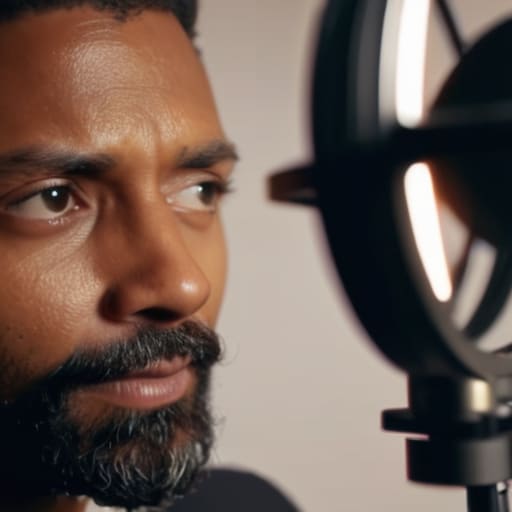
When you’re sitting there and you realize the last four minutes have been a deep dive into a guest’s vintage stamp collection instead of the industry shift you actually came to discuss, you need immediate conversational control strategies. You can’t just wait for a natural pause that might never come. I’ve learned that the best way to manage interview tangents is to use the “bridge and pivot” method. You acknowledge what they said—just a brief, one-sentence validation—and then immediately tie it back to your original question. For example: “That’s a fascinating bit of history, and it actually reminds me of what you mentioned earlier regarding…” It feels less like an interruption and more like a logical progression of the thought.
If the guest is a chronic rambler, you have to be more assertive. This isn’t about being rude; it’s about maintaining topical relevance for the person listening on their commute. If you let the story wander into a dead end, you’re essentially wasting your listener’s time. I often find that physically leaning forward or slightly raising my hand can signal a transition without you having to say a word. It’s a subtle cue that tells the guest, “I’m about to jump back in,” which helps in handling rambling guests without making them feel shut down.
Five ways to salvage the episode when the thread snaps
- Use the “Bridge and Pivot” method. Don’t just wait for a breath; wait for the specific moment they finish a sentence, then say, “That’s a fascinating point about [their tangent], and it actually ties directly into [your original topic] because…” You aren’t ignoring them; you’re just building a bridge back to the script.
- The “Clarification Trap.” If they are spiraling, interrupt with a question that forces them to summarize. “Wait, just so I’m following—are you saying that [X] led to [Y]?” Once they’ve had to condense their rambling into a single sentence, you have the opening to steer them back to the main question.
- Lean on your notes as a physical prop. If you’re recording in person, look down at your notebook or tablet. If you’re remote, physically pick up your pen. It signals to the guest’s subconscious that you are following a structured path and helps break the hypnotic flow of their monologue.
- Pre-empt the drift with a “Safety Net” briefing. Before you hit record, tell them: “I’ve got a tight window and a specific arc I need to hit. If I jump in to steer us back to the topic, it’s not because you aren’t being interesting—it’s just because I’m trying to protect our structure.” It makes the interruption feel like a mutual goal rather than a correction.
- Know when to let it go—and when to cut it in post. If the tangent is actually gold, let them run for sixty seconds, then pivot. If it’s just noise, let them finish, but don’t feel guilty about being ruthless in the edit. I have a graveyard of “perfect” sentences in my files that served no purpose; don’t let your episode become one of them.
The real-world checklist
Don’t wait for the ten-minute mark to intervene; if you feel the thread slipping, pivot immediately before you’ve wasted enough audio to make the edit a nightmare.
Use “bridge phrases” like “That’s a fascinating point, and it actually connects to…” to steer them back without making them feel like they’ve failed the interview.
Accept that some tangents are worth keeping if they add texture, but if you find yourself looking at your stopwatch, it’s time to cut them loose.
The cost of the perfect tangent
I have a notebook filled with brilliant, beautiful sentences that I had to cut because they had absolutely nothing to do with the episode’s premise. They were gold, but they were dead weight. If you let a guest wander for ten minutes because you’re too polite to interrupt, you aren’t being a good host; you’re being a bad editor, and you’re wasting your listener’s time.
Nadine Okafor
The Bottom Line

At the end of the day, managing a guest isn’t about being a drill sergeant; it’s about being a steward of the listener’s time. You’ve learned that whether you use a gentle verbal bridge, a well-timed “I want to circle back to…” or a more direct intervention, the goal is the same: protecting the structural integrity of the episode. It’s going to feel uncomfortable the first few times you interrupt someone—I still get a slight knot in my stomach when I have to cut off a particularly charismatic rambler—but remember that unstructured tangents are the enemy of a good edit. If you don’t steer the ship while you’re recording, you’ll spend six hours in your DAW trying to perform surgery on a conversation that was fundamentally broken from the start.
Don’t let the fear of looking rude stop you from doing the job you were actually hired to do. Podcasting is a craft of curation, not just documentation, and that means making the hard calls in real-time. You will fail, you will miss a perfect segue, and you will occasionally cut off a brilliant thought that deserved its own ten-minute segment. That’s fine. Keep your notes, keep your levels steady, and keep practicing. The more you do this, the more you’ll realize that control is actually a form of respect—both for your guest and for the person sitting there with headphones on, waiting for you to get to the point.




