

I remember sitting in my studio three years ago, staring at a waveform that looked like a flatline, feeling absolutely nothing. I had spent fourteen hours straight trying to scrub a guest’s heavy breathing out of a high-stakes interview, and suddenly, the very thought of opening my DAW made me want to physically vomit. There was no “mindfulness retreat” or expensive life coach that could fix it; I was just hollowed out by the sheer, repetitive grind of it all. If you are currently staring at your equipment wondering how to come back after burning out without losing your mind, stop looking for a magic pill or a productivity hack.
I’m not going to sell you a ten-step wellness program or tell you to “reimagine your passion.” That’s nonsense. Instead, I’m going to talk to you about the unsexy mechanics of restarting: how to rebuild your workflow in small, manageable increments, how to set boundaries with your own calendar, and how to accept that your output might be mediocre for a few months while you find your feet again. This isn’t about inspiration; it’s about practical recovery for people who actually have work to do.
When Managing Cognitive Fatigue Becomes Impossible

There is a specific kind of wall you hit where it isn’t just that you’re tired; it’s that your brain has stopped processing the waveform. You’ll sit in front of your DAW for three hours, staring at a single clip of a guest’s “um” or “ah,” and you simply cannot decide if it needs a surgical cut or a gentle fade. This isn’t laziness. Managing cognitive fatigue in this state is less about willpower and more about acknowledging that your mental hardware is overheating. When you reach the point where you can no longer distinguish between a subtle pop and a legitimate technical error, you have moved past simple exhaustion into a territory that requires a total shutdown.
At this stage, trying to “push through” is the fastest way to ensure you never return to the mic. You have to stop treating your brain like a piece of software that just needs a reboot and start treating it like a piece of vintage gear that needs a complete overhaul. This means recognizing the signs of occupational burnout—the irritability, the brain fog, the sudden, visceral dislike of your own voice—and actually stepping away from the desk. If you don’t, you aren’t just making bad edits; you’re teaching yourself to hate the craft.
The Unglamorous Reality of Mental Health Recovery Strategies
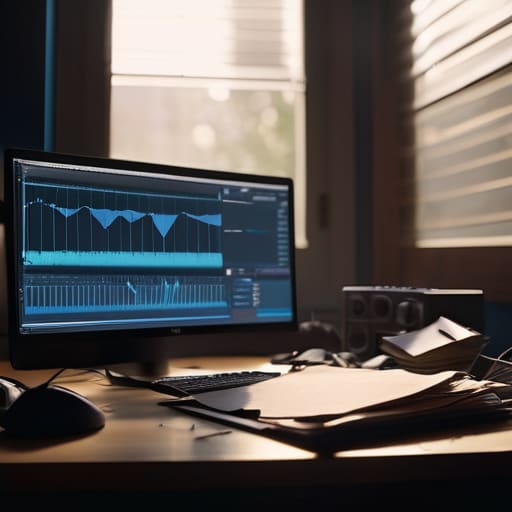
Most “wellness” advice for creators feels like it was written by someone who has never had to stare at a waveform for six hours straight until their eyes crossed. They tell you to “find your passion again,” which is useless when your passion currently feels like a heavy weight in your chest. Real mental health recovery strategies aren’t about lighting scented candles; they are about the brutal, boring work of rebuilding your capacity to function. For me, that meant admitting that my workflow was fundamentally broken. I had to stop treating my brain like a piece of hardware that could just be overclocked indefinitely.
Recovery is less about a sudden burst of inspiration and more about the slow, unsexy process of setting healthy boundaries at work. It’s deciding that you will not answer an editor’s Slack message at 11:00 PM, even if the client is being a nightmare. It’s realizing that if you don’t schedule time to actually exist outside of a DAW, you will inevitably crash again. You have to treat your energy like a finite resource—because it is—and start auditing where it’s leaking.
The Re-Entry Protocol: How to Stop Fearing the Red Light
- Lower your bitrate. I don’t mean the audio files; I mean your expectations. When you come back, don’t try to produce a six-part investigative series with cinematic soundscapes. Aim for a ten-minute solo episode or a simple conversation. If you try to jump straight back into a high-production workflow, you’ll trigger that same paralysis and end up right back in the void.
- Audit your technical friction. Burnout is often exacerbated by the small, nagging things that make the job feel harder than it is. If your DAW takes ten minutes to load because your drive is cluttered, or your mic cable has a crackle that makes you wince, fix it now. Eliminate the micro-frustrations so that the only thing you have to fight is the creative process itself.
- Set a hard “Stop Loss” on your editing time. One of the fastest ways to spiral is to spend six hours EQing a single sentence because you’re terrified of being imperfect. Use a timer. If you haven’t finished the rough cut in four hours, walk away. The goal is a finished episode, not a masterpiece that cost you your sanity.
- Rebuild your library of “easy wins.” Keep a folder of pre-recorded intros, standard transition music, and clean room tone. When you’re returning from a period of exhaustion, you don’t want to be making decisions from scratch. Having a template ready to go reduces the cognitive load of starting a new session.
- Accept the “Ghost Period.” You are going to have a few weeks where the output feels thin and the enthusiasm feels fake. That’s fine. Don’t mistake a slow start for a permanent loss of talent. Just keep the files moving. In this industry, showing up and hitting ‘export’ is 90% of the battle.
The Bare Minimums for Coming Back
Stop trying to rebuild your entire production schedule in a week; start by committing to one low-stakes task, like cleaning your audio files or organizing your plugin folders, just to prove you can still sit in the chair without panicking.
Accept that your first few edits after a break will be clunky and slow, and don’t try to compensate for that by skipping the technical basics—you’ll just end up with a messy export that you’ll have to redo anyway.
Build a “buffer of nothing” into your new workflow, meaning you stop scheduling release dates based on when you hope to finish, and start scheduling them based on when the work is actually, reliably done.
The Myth of the Grand Re-Entry
You don’t come back from burnout by suddenly finding a burst of inspiration or a new, polished workflow. You come back by sitting in a quiet room, opening your DAW, and committing to just ten minutes of cleaning up one single, messy audio file. It isn’t about a grand return to greatness; it’s about proving to yourself that you can still handle the small, tedious parts of the job without wanting to throw your interface out the window.
Nadine Okafor
Getting Back to the Mic

Look, there is no magic plugin or high-end compressor that fixes a broken sense of purpose. We’ve talked about the reality of cognitive fatigue, the necessity of setting hard boundaries with your clients, and why you can’t just “power through” when your brain feels like it’s stuck in a feedback loop. Recovery isn’t a linear path; it’s a messy, non-sequential process of reclaiming your capacity to care about the work again. You have to accept that your output might look different for a while, and that’s okay. The goal isn’t to return to the same frantic pace that broke you in the first place, but to build a sustainable workflow that actually allows you to stay in this game for the long haul.
If you are currently sitting there staring at a blank DAW session or a list of unedited files, feeling like the spark is gone for good, just remember that even the best hardware needs a period of downtime to avoid a total short circuit. You aren’t a machine, and you shouldn’t expect yourself to function like one. Take the time you need to sit in the silence. When you finally do decide to hit record again, it won’t be because you’ve “hacked” your productivity, but because you’ve finally found a way to listen to your own rhythm again. That is where the real craft begins.




