

I’ve spent enough time listening to “productivity gurus” on high-end microphones to know that most of their advice is complete rubbish. They’ll tell you that you need a revolutionary new workflow, a dedicated studio space, or a $500 planner to stay motivated, but they never mention the actual grit required. The truth about how to finish a creative project isn’t found in a seminar; it’s found in the grueling, unglamorous hours spent staring at a waveform at 2:00 AM, wondering why you even bothered. It’s about the stagnant months where your files sit untouched and your enthusiasm hits a brick wall.
I’m not here to sell you a course or a lifestyle brand. I’m here to talk about the mechanics of getting to the end. I want to walk you through the practical, often boring ways to manage your momentum and handle the inevitable technical and mental breakdowns that happen mid-way through. We are going to look at actual systems—the kind that work when you’re tired, frustrated, and ready to quit—so you can finally stop starting and actually start finishing.
Perfectionism vs Progress Killing the Idea That Everything Must Be Flawless

I spent three weeks once trying to fix a single background hum in a ten-minute interview. I thought if I could just get the noise floor down to a certain decibel, the episode would finally be “ready.” It wasn’t. I was just stalling. In this industry, you learn pretty quickly that perfectionism vs progress is the most important battle you’ll fight. If you wait for the perfect guest, the perfect mic, or the perfect script, you aren’t a producer; you’re just someone with a lot of expensive gear gathering dust.
The reality is that the art of shipping work is often about deciding which flaws you can live with. You have to learn to recognize the point of diminishing returns—that moment where spending another five hours in Pro Tools isn’t making the story better, it’s just making you miserable. Most of the time, the listener won’t notice that slight pop on syllable four, but they will notice if you disappear for six months because you were too scared to release something imperfect. Stop polishing the edges and just get the file out the door.
Creative Workflow Optimization for When You Just Want to Quit
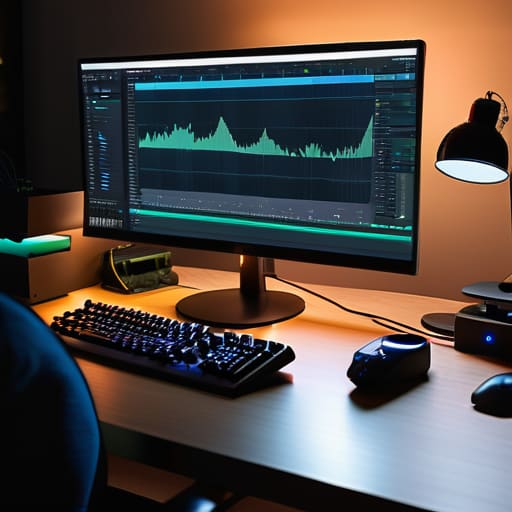
When you’re staring at a waveform that looks like a mountain range or a script that feels like a pile of junk, you don’t need “inspiration.” You need a system that doesn’t rely on you feeling inspired. For me, that means breaking the work into micro-tasks that are too small to fail. Instead of “editing the episode,” my task list says “level the guest’s vocal track” or “remove the mouth clicks from the first five minutes.” This kind of creative workflow optimization is about lowering the barrier to entry so low that even a tired, frustrated version of you can manage it.
If you’re hitting a wall, stop trying to power through with sheer willpower; that’s just a fast track to managing creative burnout. I’ve learned that when the momentum dies, I have to switch from “creator mode” to “technician mode.” If I can’t write the next segment, I’ll spend an hour cleaning up the background noise or organizing my file structure. It’s not glamorous, but it keeps the gears turning without demanding the emotional heavy lifting that leads to quitting.
The Unsexy Mechanics of Getting to the Export Button
- Set a hard deadline for your first “good enough” cut. In my experience, if you don’t pick a date to stop tinkering with the EQ or the compression, you’ll spend six months polishing a single episode that should have taken twenty hours. Pick a date, hit export, and move to the next one.
- Build a buffer for the inevitable disasters. I don’t care if your project is a podcast, a novel, or a documentary; something will break. A guest will flake, a hard drive will corrupt, or you’ll get the flu. If your timeline assumes everything goes perfectly, you haven’t built a project, you’ve built a fantasy.
- Work in small, measurable chunks rather than “creative sessions.” Don’t sit down to “work on the podcast.” Sit down to “clean up the noise floor on the first ten minutes” or “write the transition for segment two.” It’s much harder to quit when the task is a specific, finite action.
- Stop looking at the mountain and start looking at your feet. When I’m halfway through a long-form series and I feel that specific dread of how much is left, I stop thinking about the final release. I focus only on the next 30 minutes of audio. If you can manage the next 30 minutes, you can manage the project.
- Learn to live with the “irrelevant perfects.” You’re going to have moments where you record something brilliant that doesn’t actually serve the story or the episode. I keep a list of these for myself. Recognize them, acknowledge they were good, and then cut them. Keeping them in the project is just a way of stalling.
The Hard Truths to Carry With You
Stop waiting for the “perfect” edit or the perfect guest; a finished episode with a slight hiss is infinitely more useful than a masterpiece sitting in your ‘Drafts’ folder for six months.
Build a workflow that accounts for failure, because you will lose files, guests will flake, and your hardware will eventually fail—plan for the mess so it doesn’t derail the entire project.
Accept that the first few months of any project are often a shouting match with a void, and that the only way to get to the part where people actually listen is to stop obsessing over the metrics and just keep hitting ‘export.’
The Myth of the Polished Masterpiece
You don’t finish a project by waiting for the moment it feels perfect; you finish it by accepting that the final export will always have a few rough edges and realizing that a completed, imperfect file is infinitely more useful than a flawless one sitting in your ‘Work in Progress’ folder.
Nadine Okafor
The Finish Line is Just a Milestone

Look, we’ve covered a lot of ground, from the psychological trap of perfectionism to the practical reality of building a workflow that doesn’t leave you staring blankly at a DAW or a blank page for three hours. The takeaway is simple: you cannot edit a ghost, and you cannot launch a project that only exists in your head. You have to accept the technical imperfections and the messy, unpolished edges that come with actually shipping something. Whether it’s a podcast episode with a slightly inconsistent room tone or a draft that needs more work, the goal is to get it out of your system and into the world.
There will be a period, usually around the six-month mark, where the initial excitement has evaporated and you feel like you’re just moving digital files around for no reason. I’ve been there, sitting in a dark studio at 2 AM wondering why I bother. But the difference between a hobbyist and a professional isn’t talent; it’s the ability to sit through the boredom and the doubt until the file is exported. Don’t wait for the “perfect” moment to call it finished. Just hit export, release it, and start thinking about what you’re going to build next.




