

I remember sitting in my tiny, damp flat in Birmingham back in the late nineties, staring at a waveform on a monitor that looked like a flatline. I had spent three weeks recording a series on local folk musicians, only to realize my download numbers were essentially zero. It’s a specific kind of soul-crushing quiet, isn’t it? Everyone tells you to “find your passion” or “build a brand,” but nobody tells you about the sheer, grinding boredom of the middle months. They don’t mention that learning how to keep making things when nobody is watching is less about inspiration and more about mechanical discipline.
I’m not here to sell you a productivity masterclass or a ten-step system for viral growth. I’ve spent two decades in the edit suite, and I know that the “magic” is mostly just showing up when you’d rather be doing anything else. In this post, I’m going to skip the fluff and talk about the actual logistics of staying sane: how to manage your technical workflow when the dopamine hits stop, and why your process matters more than your metrics.
Mastering Your Craft in Private Before the World Cares

When I was first starting out in Birmingham, I thought the goal was to get people to listen. I was wrong. The real goal is mastering your craft in private before you ever hit ‘publish’ on a series that actually matters. If you spend your first year chasing download numbers, you’ll burn out by month three because those numbers are fickle and, frankly, they don’t tell you if your compression is too heavy or your pacing is sluggish. You need to treat your early, unlistened-to episodes as a laboratory. This is where you learn the difference between a decent recording and a professional one.
This phase is entirely about the importance of invisible work. It’s the hours spent scrubbing out mouth clicks or re-learning how to use a limiter until it sounds natural rather than squashed. If you can’t find satisfaction in the technical minutiae of a single, perfect audio file, you won’t survive the long stretches of silence that follow a launch. You have to focus on building creative discipline through the repetition of the boring stuff. If you can learn to love the edit when no one is there to applaud it, you’re actually ready to be a producer.
Building Creative Discipline When the Metrics Are Zero

When you’re staring at a download count that sits stubbornly at twelve—and six of those were your mum—the temptation to pivot or quit is massive. It’s easy to mistake a lack of an audience for a lack of quality, but that’s a trap. Building creative discipline isn’t about waiting for a spike in the analytics; it’s about showing up to the DAW on a Tuesday morning because that’s what you do, regardless of whether the graph is moving. You have to decouple your sense of worth from the dashboard. If your only fuel is external praise, you’ll run out of gas before you ever hit your stride.
This is where you focus on the technicalities that actually matter. Instead of obsessing over social media engagement, spend that energy learning how to properly de-ess a vocal or how to weave a transition without it sounding like a jump cut. Finding joy in the process comes from that specific moment when you finally nail a complex edit or fix a problematic recording environment. That’s the invisible work that eventually separates the amateurs from the professionals. You aren’t just making noise; you’re building a toolkit that will be ready when the world finally decides to tune in.
Five ways to stop staring at the dashboard and start working
- Stop checking your downloads every morning. I know it’s tempting, but if you’re looking at a flat line on a graph, you aren’t producing; you’re just mourning. Set a specific time once a week—say, Friday at 4:00 PM—to look at your analytics, and then close the tab. The rest of the week belongs to the edit, not the ego.
- Build a “buffer” of finished episodes. You should aim to have at least four episodes fully edited, mastered, and exported before you even think about hitting publish on episode one. This creates a safety net for when life happens—when a guest ghosts you or your laptop decides to update right before a deadline—and it stops the panic that leads to rushed, sloppy work.
- Focus on technical benchmarks rather than social validation. Instead of asking “did people like this?”, ask “is my noise floor below -60dB?” or “is my compression consistent across the whole track?”. If you can hit your own technical standards, you’re improving. If you’re only chasing likes, you’re just a performer, and performers burn out when the applause stops.
- Curate a “kill file” of your best mistakes. I keep a folder of perfect sentences I had to cut because they didn’t fit the narrative. When you feel like you’re making nothing of value, go through your old raw files. Seeing the actual substance of your work, even the discarded bits, reminds you that the craft is happening, even if the broadcast isn’t.
- Lower the stakes of your recording environment. Don’t wait for the perfect studio or the expensive Shure SM7B to start. If you can make a decent sounding podcast in a closet with a dynamic mic and a blanket over your head, you’ve learned more about signal-to-noise ratios than someone who just buys their way into a professional booth. The gear doesn’t make the show; the discipline does.
The Reality Check
Stop checking your downloads every morning; it’s a dopamine trap that will kill your momentum before you’ve even found your voice.
Use the quiet periods to obsess over the technical minutiae—like learning how to actually manage a noise floor or mastering your EQ—because once people start listening, you won’t have time to fix your mistakes on the fly.
Build a backlog of finished work so that when your motivation inevitably hits a wall, you have a buffer of content that keeps the machine running without you having to force it.
The Metric Trap
Don’t mistake a flat download graph for a lack of progress; the real work is the muscle memory you build during those months when you’re editing in a dark room and the only person listening is you.
Nadine Okafor
The Long Game
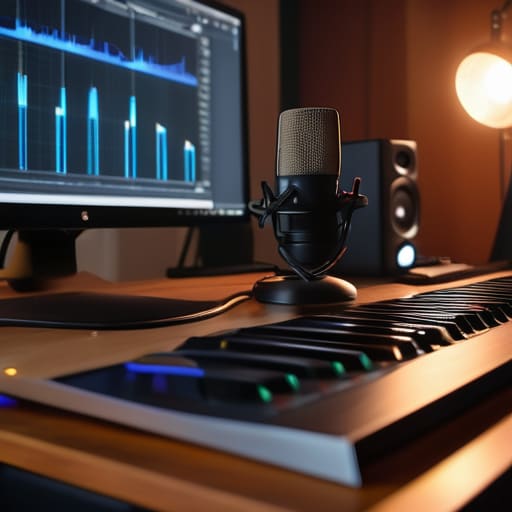
At the end of the day, there isn’t a magic setting on a compressor or a specific upload schedule that will suddenly summon an audience out of thin air. You’ve spent this time learning how to manage your own momentum when the downloads are sitting at double digits, how to refine your technical workflow so you aren’t fighting your software, and how to treat your creative output as a professional habit rather than a mood-dependent hobby. It’s about the unglamorous work: the meticulous editing, the room treatment, and the decision to hit record even when you’re certain the only person listening is your mum. If you can master the craft while the room is empty, you won’t be scrambling to catch up when it finally fills up.
Don’t let the silence convince you that you’re failing. In my experience, the most resilient producers aren’t the ones who went viral on their third episode; they are the ones who were still there, still cutting tape, two years later. The void isn’t a sign that your work is bad; it’s just the space where you build your foundation. Keep your levels consistent, keep your ears sharp, and just keep making the thing. Eventually, the math catches up to the effort.




