

I remember sitting in a cramped studio in Birmingham, staring at a quote I’d just sent to a client, my stomach doing slow, nauseating flips. I had undersold myself by nearly forty percent because I was terrified that if I asked for the actual cost of my time, they’d find someone cheaper on a freelance marketplace. I spent the next three weeks editing until my eyes bled, essentially paying them for the privilege of doing their work. Most of the “gurus” online will tell you that you need a complete rebrand or a fancy new website to fix this, but that’s nonsense. Learning how to charge more without apologising isn’t about your aesthetic; it’s about the psychological shift from being a pair of hands to being a professional with a set of standards.
I’m not here to sell you a masterclass or a ten-step manifestation ritual. I’m going to tell you exactly how I restructured my freelance rates, how to handle the inevitable “that’s a bit high” email, and why showing your math is your best defense against client pushback. We’re going to skip the fluff and look at the actual mechanics of value, so you can stop working for pennies and start working for a living.
Overcoming Imposter Syndrome in Pricing and the Quiet Panic

That quiet panic usually hits right around the time you’re typing out an invoice or drafting an email about a rate hike. You sit there, staring at the cursor, convinced that if you ask for what you’re actually worth, the client will suddenly realize you’re just a person in a home studio with a collection of old tape machines and no real authority. This is the core of overcoming imposter syndrome in pricing: recognizing that the fear isn’t about your skill, but about your perceived right to be paid for it. I spent my first three years doing exactly that—shrinking my quotes because I thought my experience didn’t “count” unless it was academic.
The truth is, your clients aren’t paying for your degree; they are paying for the fact that you won’t let a bad recording ruin their launch. When you stop viewing yourself as a hobbyist and start communicating your value proposition in terms of reliability and technical precision, the panic subsides. You aren’t asking for a handout; you are presenting a professional cost for a professional result. If you treat your pricing like a negotiation of your worth rather than a request for permission, they will too.
The Psychology of Premium Pricing Beyond the Fluff
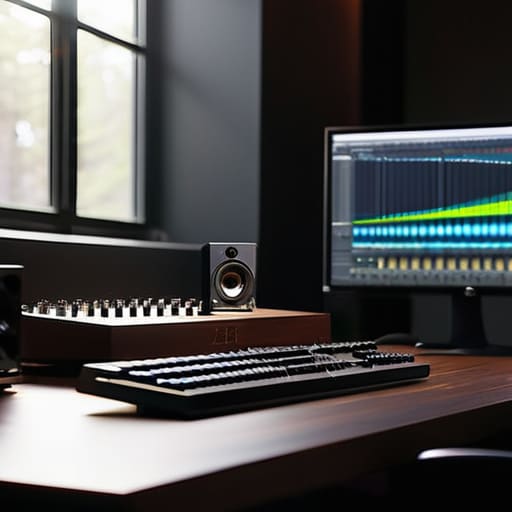
The problem isn’t that you don’t know what your time is worth; it’s that you’re viewing your rate as a request for permission rather than a business transaction. When you lean into the psychology of premium pricing, you have to realize that a low price actually signals risk to a serious client. If I’m hiring someone to edit a high-stakes documentary series and they quote me a rate that barely covers their rent, I’m not thinking, “What a bargain.” I’m thinking, “This person is going to disappear mid-project or use a cracked version of Audition.” High rates act as a proxy for reliability.
You also need to stop treating your invoice like a negotiation for your survival. If you spend your time justifying every decimal point, you’ve already lost the room. Instead of explaining why you need the money, focus entirely on communicating value proposition to clients through the lens of their specific problems. You aren’t selling “hours of editing”; you are selling the peace of mind that they won’t have to listen to a guest’s heavy breathing or a room’s hum during their launch week. Value is about the outcome, not the clock.
Five Ways to Stop Discounting Your Sanity
- Itemize the actual labor, not just the “final file.” When I send a quote, I don’t just write “Podcast Editing – £300.” I list the pre-production sync, the noise reduction pass, the level normalization, and the show notes. When a client sees the granular reality of the work, they stop viewing your fee as a suggestion and start seeing it as a calculation.
- Build a “complexity buffer” into your base rate. If you know a specific guest is a nightmare to clean up—the kind who records in a kitchen with a humming fridge—don’t wait until you’re halfway through the edit to realize you’re losing money. Set a standard rate that accounts for the inevitable technical mess, rather than charging extra every time things go wrong.
- Stop using “soft” language in your emails. Phrases like “I was thinking maybe we could try…” or “Does this price seem okay to you?” are invitations for clients to haggle. Use declarative sentences. “My rate for this project is £X” is a fact, not a negotiation starter. If they can’t afford you, that’s a budget mismatch, not a personal failure on your part.
- Separate your “learning time” from your “billing time.” I spent years making mistakes that cost me hours of unpaid troubleshooting. Now, I don’t charge clients for the time it takes me to figure out a new plugin, but I absolutely charge for the expertise that allows me to use it. You aren’t charging for the hour it takes to do the job; you’re charging for the ten years it took you to learn how to do it in an hour.
- Have a “walk-away” number. Before you even get on a discovery call, decide the absolute minimum you will accept to make the project worth your time. If the client’s budget sits below that line, thank them for their interest and move on. There is nothing more expensive than a low-paying client who demands high-level production.
The Bottom Line

Stop pricing based on your “hope” for the project; price based on the hours you know it will take to fix the guest’s bad audio and the weeks you’ll spend chasing them for files.
If a client pushes back on your rate, don’t lower the price to save the deal—reduce the scope of work, or you’ll spend the next three months resenting every single minute of the edit.
Professionalism isn’t about being polite; it’s about being clear, having a signed contract, and sending an invoice the second the files are delivered without feeling like you’re asking for a handout.
The Math of the Middle Ground
When you’re staring at a client who wants a documentary-style edit but only wants to pay for a quick trim, stop trying to negotiate your worth. Just show them the math: if they want the hours of research, the noise reduction, and the surgical precision it takes to make a story actually land, they pay for those hours. You aren’t being difficult; you’re just refusing to subsidize their budget with your own unpaid labor.
Nadine Okafor
The Bottom Line
At the end of the day, raising your rates isn’t some grand psychological breakthrough; it’s just a business adjustment. You’ve spent years learning how to spot a bad waveform, how to manage a difficult guest, and how to turn a messy hour of raw audio into something that actually makes sense. When you stop viewing your fee as a “request for permission” and start seeing it as the cost of professional expertise, the math changes. You aren’t just selling minutes of edited audio; you are selling the certainty that the final product won’t fail. Stop treating your invoice like a confession and start treating it like a statement of fact.
I know the feeling of staring at a sent quote and waiting for the client to tell you you’ve gone too far. I’ve been there, usually right before I realized that the clients who balk at a fair rate are almost always the ones who end up being the most expensive in the long run. If you want to do this work for another twenty years without burning out or losing your mind, you have to value your own time as much as you value the craft. The industry isn’t going to hand you a pension or a pay rise out of the goodness of its heart; you have to build that foundation yourself, one unapologetic invoice at a time.




